Books
Jump to a Book:
- A Comprehensive Survey of Rock Art in Upper Tibet, Vol. II. Central and Western Byang thang
- A Comprehensive Survey of Rock Art in Upper Tibet, Vol. I. Eastern Byang thang
- Besting the Best: Warriors and War in the Religious and Cultural traditions of Tibet
- Drawn and Written in Stone: An Inventory of Stepped Shrines and Early Rock Inscriptions in Upper Tibet (ca. 100 BCE to 1400 CE)
- Tibetan Silver, Gold and Bronze Objects and the Aesthetics of Animals in the Era before Empire: Cross-cultural Reverberations on the Tibetan Plateau and Soundings from other Parts of Eurasia.
- Antiquities of Zhang Zhung: A Comprehensive Inventory of Pre-Buddhist Sites on the Tibetan Upland, Residential Monuments, vols. 1 & 2
- The Dawn of Tibet: The Ancient Civilization on the Roof of the World
- Death and Beyond in Ancient Tibet
- Zhang Zhung: Foundations of Civilization in Tibet
- Calling Down the Gods
- Antiquities of Upper Tibet
- Antiquities of Northern Tibet
- Divine Dyads: Ancient Civilization in Tibet
2023
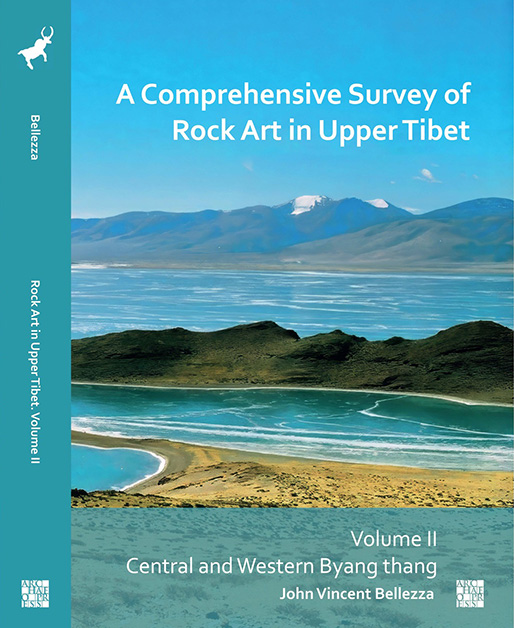 A Comprehensive Survey of Rock Art in Upper Tibet, Vol. II. Central and Western Byang thang
Oxford: Archaeopress, November 30, 2023
Focusing on the central and western parts of the region, this is the second of five volumes that comprehensively document rock art in Upper Tibet. It examines a panoply of graphic evidence found on stone surfaces, supplying an unprecedented view of the long-term development of culture and religion on a large swathe of the Tibetan Plateau. The pictographs (rock paintings) and petroglyphs (rock carvings), host sites, and descriptions and analyses presented are the direct result of intensive fieldwork conducted by the author in Upper Tibet between 1995 and 2016. Information on rock art production techniques, subject identification, thematic class, mode of presentation, physical condition, estimated age, and relative location are supplied for each piece of rock art. In addition to the datasets, the book offers rock art site descriptions and assesses the cultural, religious and artistic development of these locations.
For purchase of book and open access digital copy:
https://archaeopress.com/Archaeopress/Products/9781803276168
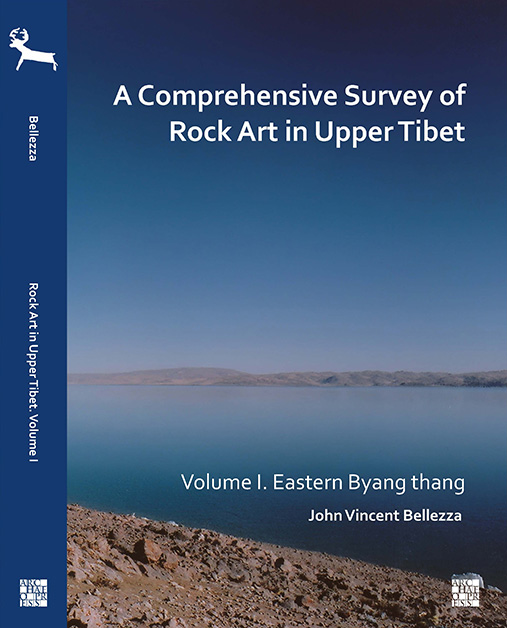 A Comprehensive Survey of Rock Art in Upper Tibet, Vol. I. Eastern Byang thang
Oxford: Archaeopress, August 31, 2023
Focusing on the eastern part of the region, this is the first in a series of five volumes that comprehensively document rock art in Upper Tibet. It examines a panoply of graphic evidence found on stone surfaces, supplying an unprecedented view of the long-term development of culture and religion on a large swathe of the Tibetan Plateau. The pictographs (rock paintings) and petroglyphs (rock carvings), host sites, and descriptions and analyses presented are the direct result of intensive fieldwork conducted by the author in Upper Tibet between 1995 and 2016. Information on rock art production techniques, subject identification, thematic class, mode of presentation, physical condition, estimated age, and relative location are supplied for each piece of rock art. In addition to the datasets, the book offers rock art site descriptions and assesses the cultural, religious and artistic development of these locations.
For purchase of book and open access digital copy:
https://www.archaeopress.com/Archaeopress/Products/9781803275031
2020
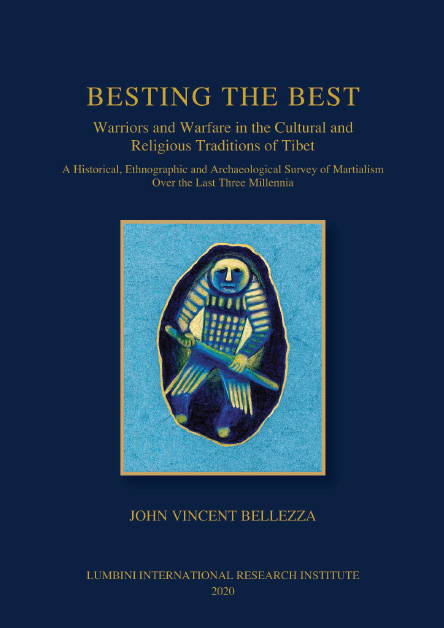 Besting the Best: Warriors and War in the Religious and Cultural traditions of Tibet. A historical, ethnographic and archaeological study on the nature of martial activities over the last three millennia.
Lumbini: Lumbini International Research Institute.
Employing historical, ethnographic and archaeological sources, this monograph explores the human and material agents of conflict and war on the Tibetan Plateau. The cultural and religious foundations of combat and other bellicose traditions are surveyed through Tibetan textual and anthropological evidence, establishing an interpretative framework for analyzing the significance of the ancient rock art, monuments and artefacts also featured in this work. Set against such archaeological and artistic records, the investigation of martial ideas, practices and technologies permits the postulation of longstanding links in the conception and conduct of warfare in Tibet.
For Cover, Table of Contents and Introduction to the book click here:
http://www.tibetarchaeology.com/pdf/Besting_the_Best_JVB_2020_LIRI.pdf
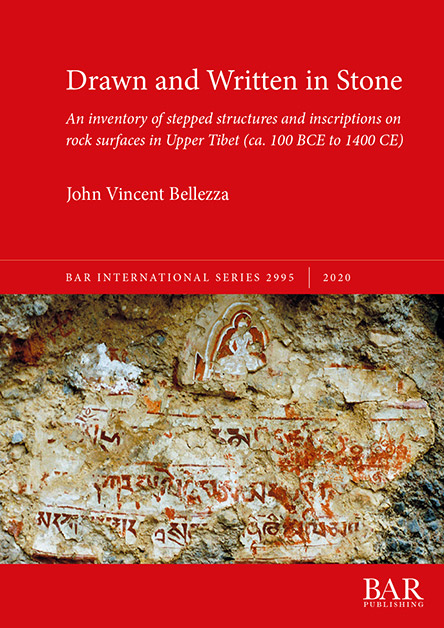 Drawn and Written in Stone: An Inventory of Stepped Shrines and Early Rock Inscriptions in Upper Tibet (ca. 100 BCE to 1400 CE)
British Archaeological Reports International Series, vol. 2995. Oxford: BAR Publishing.
Drawn and Written in Stone explores the religious history of the highest part of the Tibetan Plateau through its rock art and inscriptions. It is focused on facsimiles of ritual and ceremonial monuments carved and painted on stone surfaces and rock inscriptions in the Tibetan language, vital archaeological and historical materials for appraising the development of religion in Tibet, ca. 100 BCE to 1400 CE. By probing the complexion of figures and letters in stone, this work considers how early cult traditions contributed to the establishment of Tibetan Buddhism and a rival faith known as Yungdrung Bon. Outside of the Indian cultural context, relatively little has been written about the historical antecedents of these popular Tibetan religions for a want of sources. This monograph helps remedy this large gap in Tibetan studies by drawing upon the author’s surveys of rock art and rock inscriptions conducted in upmost Tibet between 1995 and 2013.
To order online click here:
https://www.barpublishing.com/drawn-and-written-in-stone.html?cookies_accepted=Y
For Cover, Table of Contents and Introduction to the book click here:
http://www.tibetarchaeology.com/pdf/S2995-Bellezza_Intro.pdf
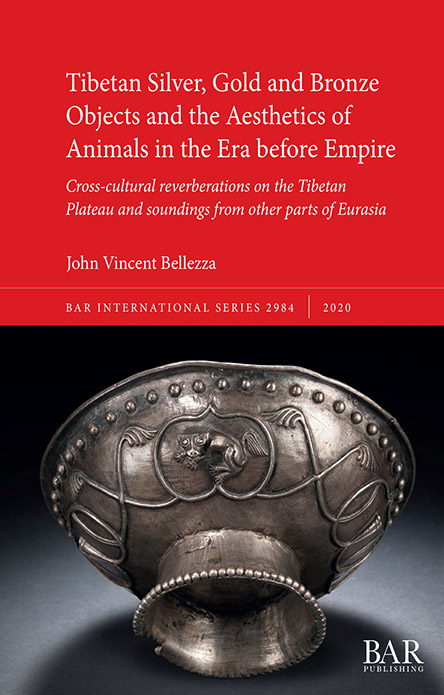 Tibetan Silver, Gold and Bronze Objects and the Aesthetics of Animals in the Era before Empire: Cross-cultural Reverberations on the Tibetan Plateau and Soundings from other Parts of Eurasia.
BAR International Series, vol. 2984. Oxford: BAR Publishing.
This archaeological and art-historical study is woven around rock art and ancient metallic objects attributed to Tibet. The silver bowls, gold finial, and copper alloy spouted jars and trapezoidal plaques featured are assigned to the Iron Age and Protohistoric period. These rare objects are adorned with zoomorphic subjects mimicking those found in rock art and embody an artistic zeitgeist widely diffused in Central Eurasia in Late Prehistory. Diverse sources of artistic inspiration and technological capability are revealed in these objects and rock art, shedding light on their transcultural dimension. The objects and rock art of this work prefigure the Tibetan cosmopolitanism of early historic times promoted through the spread of Buddhist ideas, art and craft from abroad. The metallic objects and petroglyphs of this study are markers of relationships between Tibet and her neighbours. These transactions enabled a fusion of Tibetan innovation and foreign inventiveness, a synthesis of disparate ideas, aesthetics and technologies in the objects and rock art presented.
To order online click here:
https://www.barpublishing.com/tibetan-silver-gold-and-bronze-objects-and-the-aesthetics-of-animals-in-the-era-before-empire.html
For Cover, Table of Contents and Introduction to the book click here:
http://www.tibetarchaeology.com/pdf/S2984-Bellezza_TOC_Intro.pdf
2014
 Antiquities of Zhang Zhung: A Comprehensive Inventory of Pre-Buddhist Sites on the Tibetan Upland, Residential Monuments, vol. 1.
Miscellaneous Series – 28. Sarnath: Central University of Tibetan Studies. Online version: Tibetan & Himalayan Library (THlib.org): http://www.thlib.org/bellezza/, 2011.
 Antiquities of Zhang Zhung: A Comprehensive Inventory of Pre-Buddhist Sites on the Tibetan Upland, Ceremonial Monuments, vol. 2.
Miscellaneous Series – 29. Sarnath: Central University of Tibetan Studies. Online version: Tibetan & Himalayan Library (THlib.org): http://www.thlib.org/bellezza/, 2011.
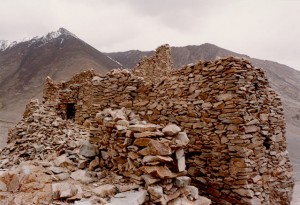
Two volumes containing a total of 414,000 words, 2100 photographs and 43 maps
The upper portion of the Tibetan Plateau, a land of large lakes, interminable plains, lofty peaks and deep gorges, stretches north and west of lha sa for 1500 km. Bound by high mountain ranges on all sides and averaging 4600 m above sea level, Upper Tibet gave rise to an extraordinary civilization in antiquity. Beginning about 3000 years ago, a chain of mountaintop citadels, temples and intricate burial complexes appeared in this vast region of some 600,000 km². These monuments were part and parcel of a unique human legacy, which flourished until the Tibetan imperium and the annexation of Upper Tibet by the spu rgyal emperors (btsan po) of Central Tibet. Gradually the unique beliefs, customs and traditions of archaic Upper Tibet yielded to a pan-Tibetan cultural entity that arose in conjunction with VajrayAna Buddhist teachings.
A millennium ago, Buddhist domination of Tibet spawned a new civilization, one in which the celebrated Lamaist religions of Bon and Buddhism came to hold sway. The inexorable march of time and the ascent of the new religious order slowly but surely clouded the memory of the earlier cultural heritage. As a result, many of the ancient achievements of the Upper Tibetan people were forgotten, only to be preserved in the impressive monumental traces of the region. Antiquities of Zhang Zhung attempts to reclaim these past glories by systematically describing the visible physical remains left by the ancient inhabitants of Upper Tibet.
The residential and ceremonial monuments of Upper Tibet, established by what can be termed the ‘archaic’ cultures of the region (zhang zhung and sum pa of the literary records), strongly contrast with those built in the central and eastern portions of the Plateau in the same span of time. There are also very substantial differences between the archaeological makeup of the archaic cultural horizon (circa 1000 BCE to 1000 CE) and that of the Lamaist era (circa 1000 CE to 1950 CE) in Upper Tibet. The unique monumental assemblage of Upper Tibet delineates the bounds of a paleocultural complex squarely based in the uplands of the Plateau. The special physical hallmarks and highland homeland of this ancient culture set it apart from other Bodic cultures, which arose in the central and eastern parts of the Tibetan Plateau. The cultural world of antediluvian Upper Tibet is also readily distinguished from the civilizations that appeared in adjoining lands to the south, west and north. In the archaic cultural horizon the Upper Tibetans constructed highly durable all-stone elite residences, temples and castles, developing stone working techniques particularly suited to their extremely harsh natural environment. They also designed and built elaborate burial complexes containing many types of ritual structures made entirely of stone. The use of stone corbelling for the construction of roofs and the erection of pillars in peculiar configurations for ceremonial purposes reached a very high level of proficiency in Upper Tibet. The eminently practical qualities of this architecture have helped to insure that the remains of a surprising number of monuments have endured to the present day.
Although the design and construction of the monumental assemblage of archaic Upper Tibet is highly distinctive, affinities with other archaeological cultures of the Plateau and steppes do certainly exist. During the first millennium BCE and first millennium CE a tremendous amount of cross-fertilization occurred throughout Inner Asia.
Antiquities of Zhang Zhung systematically describes the physical remains of 388 Upper Tibetan monumental sites documented since 2001. It is an inventory of archaic archaeological sites; those that differ from Lamaist monuments in terms of chronology, morphology, function, mythology and geographic orientation. This catalogue of archaeological sites should prove useful to scholars working in a variety of disciplines. As a reference work, it is well suited to provide a perspective for subsequent studies devoted to better understanding the archaic physical and cultural environment of Upper Tibet and other regions of Inner Asia. It presents uniform sets of physical and cultural data for each of the sites surveyed to produce a coherent view of the monumental vestiges scattered across the Upper Tibetan landscape. As a compendium of archaeological sites, this work is primarily quantitative (descriptions of the remaining physical evidence) in nature. To some degree, it also provides qualitative information (analyses of the ideological groundwork underlying the physical manifestations) in order to elucidate various abstract aspects of the monuments. This methodological approach, borrowing from archaeological, literary and ethnographic sources of information, permits an integral picture of ancient Upper Tibetan archaeological assets to emerge. By bringing Upper Tibet’s fascinating past in clearer focus, we better acquaint ourselves with formative elements in the development of Bodic civilization. In turn, this permits us to move one step closer to understanding the Tibetan Plateau’s place in the Indo-Eurasian cultural mosaic of yore.
An inspection of the sites surveyed opens a window onto a remarkable Tibetan heritage. Rather than a cultural backwater, upland Tibet emerges as a nexus of technological and cultural brilliance. A chain of citadels circumscribing the region reflects the existence of a vibrant social order in which agriculture played a vital role. From the first millennium BCE onwards, a warrior and priestly elite appears to have founded and occupied these citadels. The sheer number of fortified sites built on summits shows that martial struggle was a prominent preoccupation (which is also mirrored in the Tibetan literary record). The top strata of ancient Upper Tibetan society also constructed all-stone temples and residences in which the cultural life of the region reached a crescendo. Troglodytic communities sprung up wherever there were natural caves or where it was possible to excavate earthen formations. In the cultural hothouse environment of first millennium BCE and early first millennium CE Inner Asia, Upper Tibet appears to have been one of several regions with superior intellectual and military capabilities. The legendary status accorded zhang zhung in Tibetan literature buttresses the archaeological record, indicating that Upper Tibet had indeed reached a considerable level of human attainment before the spread of Buddhism.
The existence of intricate burial rites is echoed in the many tombs and necropoli that dot the entire region. These architecturally diverse funerary sites allude to sophisticated eschatological concepts and practices prevalent in early Upper Tibet. The mortuary archaeological evidence also records yawning divisions in wealth and social status, a sign that the region possessed a hierarchical society with deep social, economic and political divisions. This puts the highland variant of Bodic civilization in line with surrounding civilizations of the Iron Age and the classical period, where social stratification, economic diversification and warfare were rampant. While many linkages between the empirical and textual perspectives remain hypothetical, the intellectual profundity of matters related to death in both the literary and archaeological records is unmistakable and very significant.
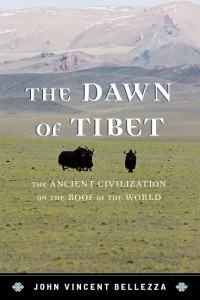 The Dawn of Tibet: The Ancient Civilization on the Roof of the World
Rowman & Littlefield Lanham, Maryland; London, United Kingdom
ISBN 978-1-4422-3461-1 (cloth : alk. paper) — ISBN 978-1-4422-3462-8 (electronic)
This groundbreaking book provides a new and vital perspective on the culture and history of Tibet. Drawing on three decades of research and exploration, the author recounts the discovery of an ancient civilization on the most desolate reaches of the Tibetan plateau, revolutionizing our ideas about who Tibetans really are. While we now equate Tibet with Buddhism, it was also once a land of warriors and chariots, whose burials included megalithic arrays and golden masks. This first Tibetan civilization was a cosmopolitan one with links extending across Eurasia, bringing it in line with many of the major cultural innovations of the Late Bronze Age and Iron Age. Dawn of Tibet presents a broad range of archaeological, textual, and ethnographic materials collected and analyzed by the author over the course of his epic journeys. His book describes the vast network of castles, temples, megaliths, necropolises, and rock art established on the highest and now depopulated part of the Tibetan plateau once inhabited by an ancient culture and people known as Zhang Zhung in Tibetan texts. Bellezza relates literary tales of priests and priestesses, horned deities, and the celestial afterlife to the actual archaeological evidence, providing a fascinating perspective on the origins and development of a civilization that flourished long before Buddhism took root in Tibet.
Table of Contents
Maps (by Sally Walkerman)
Introduction
Chapter One
What civilization: discovering the cultural origins of Tibet
- From nowhere to somewhere
- Something definite begins to emerge
- Gaining ground to further revelation
- The means and methods of chronicling Zhang Zhung sites
Chapter Two
The great sky realm: the land of Upper Tibet
- The pinnacle on the roof of the world
- The enchanting domain of Upper Tibet
- Lakes of sanctity and beauty
- Cosmic center Mount Tise
- Divine denizens, the wildlife of Upper Tibet
Chapter Three
Tillers and herders, warriors and saints: the people of Upper Tibet
- A union of farmers and shepherds
- The drokpas, wanderers of the Tibetan upland
- The drokpa attire of gods and kings
- Bestowed by heaven and earth, the sustenance of the drokpas
- The drokpa tent as a microcosm of the universe
- Human minds and animal spirits
- Farming the top of the world
- The cycle of faith, festivals and passages
- Manifold changes are buffeting modern Upper Tibet
Chapter Four
From sky to earth: the history of Zhang Zhung
- The magic and mystery of Tibetan scriptures
- The coming together of the tribes
- Descended from paradise the royal line appears
- The dominion’s embrace in kings and castles
- The gods withdraw their favor
Chapter Five
Touching the sky: the citadel and temple sites of Zhang Zhung
- Stones of time
- The abodes of the ancients
- Redoubts of power and prestige
- Hermitage and temple houses of the gods
Chapter Six
Penetrating the earth: the burial grounds of Zhang Zhung
- Marked in stone
- Cities of the dead
- Underworld tombs to the heavens
- The looting of the tombs
Chapter Seven
Flesh, blood and bones in stone: the artistic treasures of Zhang Zhung
- Inscribing history in carvings and paintings
- Strokes of time
- Symbols of life and marks of faith
- The ancient human figure in all its glory
- Animals as creatures, persons and gods
- Shrines bridging the gap between prehistory and history
- Long-lost links
- The allure of ancient art in metals
Chapter Eight
Father sky eagle and mother earth serpent: Bon as the religion of Zhang Zhung
- The beginnings of Eternal Bon
- The secret teachings of Eternal Bon
- The spread of Zhang Zhung religion to Central Tibet
- The Zhang Zhung gods of the sky and earth
- The riddle of Tönpa Shenrab and the passage of the dead
Chapter Nine
Horned heroes and turquoise maidens: the cultural and social life of Zhang Zhung
- Zhang Zhung culture from a global perspective
- Myths of the beginning
- The awesome feats of Zhang Zhung’s greatest personalities
- Warriorship in ancient Central Tibet
- The material culture of ancient Tibet
Chapter Ten
My ancestors and gods: Zhang Zhung reigns in contemporary Upper Tibet
- The link between the past and present
- Divine mountains and lakes recall the ancient traditions of shepherds and farmers
- The search for well-being through the ages
- Today’s shaman successors to the adepts of Zhang Zhung
Prologue
Bibliography
Index
2013
Verlag der Österreichischen Akademie der Wissenschaften
Philosophisch-Historische Klasse Denkschriften, vol. 454
Death and Beyond in Ancient Tibet
Archaic Concepts and Practices in a Thousand-year-old Illuminated Funerary Manuscript and
Old Tibetan Funerary Documents of Gathang Bumpa and Dunhuang
(x + pp. 293, 2 maps, 40 color plates, 16 illustrations)
This monograph brings to light the eschatological patterns and procedural constructs of death rites in ancient Tibet. It is centered on documents written between circa 800 CE and 1100 CE, which include an illuminated funerary manuscript of much rarity, two death ritual texts recently recovered in southern Tibet from the Gathang Bumpa religious monument, and several related manuscripts discovered in the Dunhuang grottoes a century ago. This book builds upon previous efforts of the author to explicate the otherworldly dimension in early Tibetan religion and culture. Many of the documents of this study were written in the Old Tibetan language and represent the oldest known literary sources for research into Tibetan funerary traditions. The work is underpinned by annotated translations, which are critically edited and painstakingly provided with Classical Tibetan word equivalents.
Each featured text is described in detail and subjected to a rigorous religious and historical analysis. Other Tibetan literature that supports the comprehension of the foundational texts of this study is also marshaled. These textual assets complement one another by progressively revealing an indigenous belief system and praxis of great depth and intricacy. The antiquated narrations and rituals concerning death presented in this book furnish a lucid view of cultural forms that circulated around Tibet before its religious universe became saturated with Buddhism and Buddhist-influenced doctrines and practices. Especially when seen through the lens of the archaeological record, the sheer intellectual and material wealth borne in the archaic funerary traditions demonstrates that Tibet was endowed with culturally advanced societies in the time before the spread of Lamaism. Bibliographies and indexes (with glossary) are appended to the main text.
2008
 Zhang Zhung: Foundations of Civilization in Tibet
A Historical and Ethnoarchaeological Study of the Monuments, Rock Art, Texts and Oral Tradition of the Ancient Tibetan Upland
Using archaeological, anthropological and philological methodologies, Zhang Zhung sets out formative elements in the development of civilization in Upper Tibet, the vast upland north and west of Lhasa. Part I of this major work comprehensively examines the monumental and esthetic traces of the Metal Age and early historic period in Upper Tibet. Based on a field survey project of twelve years duration, the morphological, constructional, mythological, and cross-cultural traits of the region’s visible archaeological wealth are described in detail, laying the groundwork for the painstaking textual analyses that follows. In Part II, annotated translations of numerous excerpts from Bon and Buddhist texts present the traditional view of Tibet’s ancient past. These native literary accounts of the early cultural, religious and political complexion of the Plateau are in turn systematically compared to the archaeological record, revealing critical areas of agreement. Zhang Zhung pioneers the application of empirical evidence to independently gauge the historicity and significance of Tibetan Bon sources. Part III is devoted to the study of the archaic funerary heritage of Tibet, a highly edifying undertaking as regards the cultural evolution of the Plateau. New perspectives on the identity and contributions of the Tibetan ethnos are obtained by subjecting Dunhuang and Bon textual materials to rigorous archaeological and ethnographic interpretation. Considerable effort is devoted to plumbing the historical depth of Tibetan funerary literature and to understanding its affinities with north Inner Asian afterlife mythology and burial practices of the first millennium BCE and the first three-quarters of the first millennium CE. Critically edited transliterations of the Tibetan works, tables of all archaeological sites surveyed, bibliographies, and extensive indexes complement the main text.
(X+842 pp., 384 illustrations, 46 maps)
Verlag der Österreichischen Akademie der Wissenschaften
2005
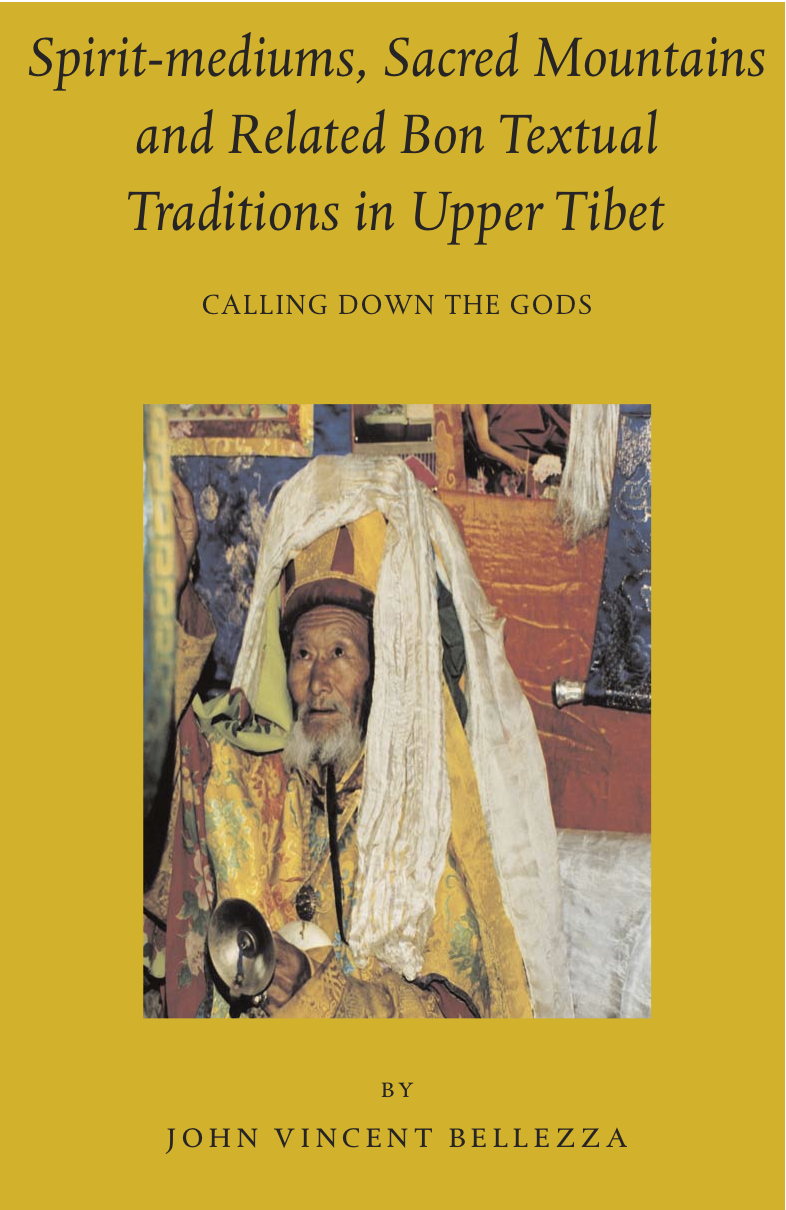 Calling Down the Gods: Spirit-mediums, Sacred Mountains and Related Bon Textual Traditions In Upper Tibet
John Vincent Bellezza
Summary
Length: Approximately 600 pp.
Graphics: 43 photographs.
Contents: 21 translated and fully annotated Tibetan texts as well as numerous excerpts, interviews with 15 spirit-mediums, references from academic literature, conclusion, bibliography, and indexes.
Publisher: Tibet Studies Library, vol. 8. Brill Academic Publishers: Leiden, 2005.
General Orientation
This book comprehensively examines the hereditary links, ritual practices and pantheon of indigenous deities on which the spirit-mediums of Upper Tibet rely. Known as lha-pa, dpa’ bo and lha-mo, these specialists in channeling the gods operate in the overlapping sTod and Byang-thang regions of northwest Tibet. This work is based on in-depth interviews and the translation of a variety of Tibetan texts. It utilizes a diachronic model to create an exposition with ethnohistorical dimensions, in which the legendary and contemporary aspects of the spirit-mediums are studied through both the oral and literary traditions. This work, drawing upon a wide range of ethnographic and textual materials to investigate the phenomenon of lha-bzhugs (spirit-possession) in Upper Tibet, analyses the way in which its historical and present day characteristics are interrelated. Thus, the continuity of tradition, and the way in which it has been conceived and preserved, is the underlying theme that gives this book its narrative and analytical coherence.
The spirit-mediums of Upper Tibet, both men and women, serve as incarnate forms of the region’s most important lha-ri (mountain gods), as well as a range of other indigenous deities. Traditionally, it is believed that when the thugs (mind) or bla (animating principle) of a divinity enters a spirit-medium, it variously acts to heal sick people and livestock, exorcise bad spirits and harmful influences, bring good fortune, and predict the outcome of future events. The first scholarly accounts of this cultural phenomenon are found in late Victorian works by Das and Waddell, in which they describe the use of a mda’ dar (festooned arrow) to expel pain and demons, the wearing of the rigs-lnga (five-lobed headdress), the reliance of spirit-mediums upon Bon and Buddhist tutelary deities, and the territorial spirits of the indigenous substrate. These remain salient features of spirit-mediumship in Upper Tibet to the present day.
Calling Down the Gods systematically explores the legendary underpinnings of spirit-mediumship in Bon literature, expounding the parallels that exist between the srid-pa’i sgra-bla (a class of primordial deities) of the gshen (ancient Bon priests) and the divinities of today’s spirit-mediums. According to Bon tradition, spirit-mediums were active in pre-Imperial times prior to 630 CE. This claim, however, cannot be historically substantiated with the cultural materials at hand. The mythic origin of their practices is related in the 14th century mDo dri med gzi brjid, the longest biography of sTon-pa gshen-rab, the founder of Bon. The text reports that sTon-pa instructed his disciples in the four main methods of conducting divinations, including the Ye-dbang lha yi bka’ babs (Mantic Directives of the Gods of Primordial Power) of which spirit-mediumship is a part. In Bon, it is thought that the ancient practice of divination was dependent upon a pacific god named Phu-wer, whose ritual observances share significant commonalities with the modern trance ceremony of the spirit-mediums. For instance, the use of both domestic and wild animals as offerings (actual and simulated) welds the liturgical structures of Bon divination, the cult of mountain gods and the oral tradition of the spirit-mediums closely together. In a text attributed to Dran-pa nam-mkha’, one of perhaps two or more personalities believed to have lived no later than the Eighth century, the details of an ensemble of ritual offerings for Phu-wer bears much similarity to the one used by today’s spirit-mediums:
The offering ingredients are various grain meals put in beer, ’brang-rgyas (a kind of edible cake), the forms of a yak, sheep, goat, various wild ungulates, and birds nicely arranged in a basin. It is decorated with meat from the upper part of an ewe’s carcass. Beer, mead and grape wine are put in [the basin]. Place it in the middle of the mandala. Burn incense three times. Do dmu-phod (a system of ablutions). Make ablutions with lustral liquids.
In a religious environment dominated by Bon and Buddhist clerics, the survival of spirit-mediums over the centuries appears to be primarily due to the persistence of ancient beliefs in Upper Tibet regarding the cause of disease and misfortune. This work details the native etiology and expounds upon why it has continued to favor spirit-mediums over other religious specialists, particularly in the area of everyday concerns. The spirit-mediums observe a respect for the natural environment and the numina they believe are inextricably connected to it, which is derived from both indigenous sanctions and the Buddhist ethic of nonviolence. An excellent résumé of the activities that provoke the autochthonous deities to harm humans and the means to reconcile their anger is found in an untitled gsol-kha (a class of propitiatory texts) attributed to four Eighth century Bon adepts, the mKhas-pa mi-bzhi, and rediscovered by a member of the Kyu-ra clan. An excerpt from this gsol-kha admirably sums up the kinds of activities that the spirit-mediums frequently cite as disease-causing, as well as providing for their resolution:
Listen to my speech, the gshen-bon’s, assembly of klu, gnyan, sa-bdag, and yul-lha (common classes of indigenous spirits). We, and the sponsors and benefactors, have not dug at your palace residence. In the event there was digging let us be peacefully reconciled. We reconcile you by offerings of jewels and incense. We did not divert your mighty waters. In the event there was diversion let us be peacefully reconciled. We reconcile you by offerings of jewels and incense.
If we screamed on mountaintops, And irrigated with water channels and reservoirs, And excavated at your mighty springs, And set big fires on mountains, And killed your mighty deer and hunted your wild ungulates, And destroyed your palaces and dwellings, And spread flesh and blood at your mighty places, And inadvertently sullied the hearth with dairy and meat products, And slept in the middle of your palaces, And went naked at your mighty places, And mindlessly made the sound phat, And startled you with drum and conch, And showed the light of fire in the evening, And poured out [hot] liquids with vapor at your mighty places….
Through textual sources and the Tibetan oral tradition, Calling Down the Gods enumerates the endowments that are believed to come from the medium’s communication with the deities. These benefits help to explain the cultural entrenchment of the indigenous pantheon and its expression in the tradition of spirit-mediumship. For example, a text found in the New Collection of the Bon bka’ brten written in the ancient style by sKu-mdun shes-rab dgongs-rgyal (1784-1835), in praise of gsas-mkhar and la-btsas (types of tabernacles), excellently depicts the vital qualities of the pantheon bound to the natural environment. An excerpt from it reads:
….By such offerings the divine protectors are pleased and the circle of gshen practitioners are benefited. Guard us during the night. Wherever we go in the four cardinal directions and eight intermediate points guide us from the front and support us from behind. Conquer the enemies, thieves and bandits. Destroy the ’dre, srin, gdon and bgegs (types of demons and malevolent forces). Ensure our necessities and avert detriments. Grant us the capability to attain wealth and possessions. Grant us the capability to attain progeny. Grant us the capability to attain a good reputation and high standing. Grant us the capability to attain long life and vitality. Grant us the capability to attain [fine] clothing. Grant us the capability to attain foods of good fortune. Grant us the capability to attain livestock. Carry out whatever activities we wish.
Outline of Contents
Calling Down the Gods is divided into five interrelated parts to create a broad and integrated survey of Upper Tibet’s spirit-mediums:
Part One
A general introduction to the spirit-mediums, summarizing their historical background, defining characteristics of the profession, as well as descriptions of their ritual paraphernalia, possessing deities and trance ceremonies. This first part of the book includes a cross-cultural comparative study of the spirit-mediums of Upper Tibet and their counterparts in other regions of Tibet and Inner Asia. Part One concludes with introductions to the following parts of the book.
Part Two
Interviews with fifteen spirit-mediums (born between 1912 and 1952) of varying scope, with interpretive material drawn from Tibetan texts. Attention is given to parallels found between certain customs of the spirit-mediums (such as the use of feathers on the head and the sprinkling of barley on the altar) and textual accounts of early ritual performances and religious personalities. The findings for each of the spirit-mediums constitute an individual section in the book. Each section is structured to include information on the lha-rgyud (lineage of the spirit-medium), the nature of his or her initiation into the practice, the iconography and properties of the possessing deities, and the proceedings of the trance ceremony. In the longer sections detailed data is provided on family history, the myth of origin of the profession, and the various litanies and rituals conducted while in trance. In several instances, in-depth material is supplied on trances observed by the author.
Part Three
Annotated translations of ritual texts devoted to the major deities of the spirit-mediums, which includes gNyan-chen thang-lha, rKyang-khra, rTa-rgo, Gangs-ri lha-btsan, rTsan-rgod nam-ra, Rol-pa skya-bdun, Dam-can mgar-ba nag-po, and gNam-mtsho phyug-mo. Stress is laid on an exposition of the similarities in the iconography, function and liturgies of the deities of the oral and literary traditions. The texts chosen for inclusion in this work adroitly illustrate the manifold interconnections that exist between spirit-mediumship and the ritual practices of alternative religious specialists such as lamas and sngags-pa. The categories of texts used are those of the gsol-kha (invocatory), bskang-ba (blandishments), bzlog-pa (harm repulsion), mdos (enticements), and gser-skyems (libation offerings) ritual systems. Translations include extensive annotations relating to vocabulary, interpretation, critical editing, and associated cultural materials. Corrupt spellings and readings are emended in the transliterations of the texts. Usually two or more works ranging in length between two and eleven folios, as well as other passages, are translated to represent each divinity. As the Bon religion claims the origin of spirit-mediumship, precedence is given to its literature; however, significant excerpts from the Buddhist literary tradition are included to achieve a comprehensive description of the various divinities. In Part Three, special attention is also paid to the verse scheme and the stress-investing trisyllabic indicators that are characteristic of the ancient bardic tradition, and which have become a hallmark of literature pertaining to the cult of indigenous deities (as well as the Ge-sar epic).
Part Four
Annotated translation of Bon literature relevant to the origins of spirit-mediumship. This part of the book begins with excerpts from the biographical gZi-brjid about the first of the nine theg-pa (the vehicles or systemized branches of the Bon doctrines) known as Phya-gshen. These references address the mythic origin of spirit-mediumship according to Bon tradition. An unpublished commentary on the relevant section of the Phya-gshen by the eminent Bon scholar Lopon Tenzin Namdak aids in the elucidation of this material. The ritual texts of the Bon divination god Phu-wer, the legendary revelatory figure of ancient times, are then introduced. This is followed by a survey of the srid-pa’i sgra-bla gods from several Bon sources, demonstrating that, although the mountain gods and sgra-bla reside in distinctive doctrinal categories (the latter is considered a far more superior class of deity), they share many iconographic characteristics and ritual functions in common. This affinity extends to the manner in which they are propitiated and offered to. This may indicate the operation of a historical continuum in which the lha-ri and sgra-bla are virtually synonymous, despite contemporary Bon theological conceptions to the contrary. Part Four of the book also makes a foray into Bon cosmogony to determine the degree of propinquity between the sgra-bla and lha-ri as another means of considering a common identity.
Part Five
The final part of Calling Down the Gods contains Bon literary references to the ritual implements and practices of the spirit-mediums. Sections are devoted to the gshang (flat-bell), drum, conch, me-long (divination mirror), the arrow and spear, incense and lustration, thun (magic missiles), and g.yang ’gugs (fortune-summoning). The aim of this exposition is basically two-fold: 1) to elaborate upon how the oral and literary traditions inform one another in the arena of indigenous religious tradition, and 2) to portray the pre-Imperial pedigree that many of the ceremonial displays of spirit-mediums have in the historico-ritual notions of the Bon religion. As we shall see, the antiquity of such traditions is documented as historical reality in the Bon ritual literature presented in this work.
2002
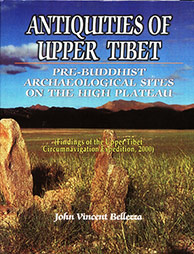 Antiquities of Upper Tibet: An Inventory of Pre-Buddhist Archaeological Sites on the High Plateau
Antiquities of Upper Tibet: An Inventory of Pre-Buddhist Archaeological Sites on the High Plateau examines a host of ancient monuments and rock art sites discovered by John Vincent Bellezza during his Upper Tibet Circumnavigation Expedition conducted in 2000. Adding significantly to his earlier work in the field, the author introduces for the first time 100 archaeological sites perched on the highest parts of the Tibetan plateau, including those found in the vicinity of holy Mount Kailash. The physical traces unearthed by the author are of the utmost importance to our understanding of the pre-Buddhist civilization of Tibet. As this work demonstrates, until the adoption of Indian Buddhism beginning in the 7th century CE, Tibet was home to an indigenous culture that was responsible for the creation of an impressive network of citadels, settlements, temples and necropolises. The documentation of these ancient monuments provided in this monograph helps to define a field with vast potential.
Antiquities of Upper Tibet first introduces the reader to the culture and environment of Upper Tibet prior to the 7th century CE. Special attention is paid to archaeological parallels with other early civilizations of Inner Asia, placing its Tibetan variant in a clearer temporal and material perspective. By outlining the interconnections that existed in early times between Tibet and her northern and western neighbors this monograph plots a course pertinent to our understanding of the development of civilization in Eurasia.
The main part of this work consists of an inventory of archaeological sites, which is organized according to a scheme of functional and morphological typologies. Each typological group is prefaced with a description of its physical characteristics, relevant Tibetan textual sources and cross-cultural comparisons. Authoritatively expounded, this evidence begins to illuminate the late prehistory of Upper Tibet, opening a new chapter in archaeology of the region. As such, this scholarly contribution can only stimulate the interest of all those who wonder about the origins of the Tibetan people and their culture.
2001
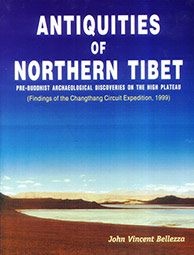 Antiquities of Northern Tibet: Pre-Buddhist Archaeological Discoveries on the High Plateau
(Findings of the Changthang Circuit Expedition, 1999)
Table of Contents
Introduction
Chapter One – Religious, Cultural and Typological Components of pre-Buddhist Archaeological Sites
Chapter Two – Hilltop Forts, Religious Edifices and other Structures Built on Summits
Chapter Three – Structures, Mostly Religious, Integrating Caves and Escarpments in their Construction
Chapter Four – Free-Standing Religious Edifices
Chapter Five – Remains of Sedentary Villages
Chapter Six – Graves with Superficial Superstructures and Graves with Cubic-Shaped structures
Chapter Seven – Isolated Pillars and Pillars within a Quadrangular Enclosure
Chapter Eight – Monolithic Arrays
Chapter Nine – Other Types of Archaeological Monuments
Chapter Ten – Pictographs and Petroglyphs
Names and Locations of pre-Buddhist Archaeological Sites Surveyed by the Author on Earlier Expeditions
Addendum – A Preliminary Archaeological Survey of bKra ri gNam mtsho Conducted in 1997 and 1998
Conclusion
Bibliography
Index
1997
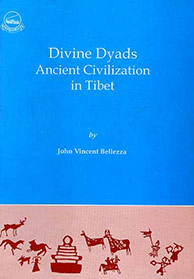 Divine Dyads: Ancient Civilization in Tibet
Synopsis
Divine Dyads: Ancient Civilization in Tibet presents an unprecedented survey of the cultural and religious history of two of the most important areas of the vast northern plains of Tibet. These two regions centered around Dang ra Lake (Dang ra g.yu mtsho) and gNam Lake (gNam mtsho) are cultural hubs of the Tibetan nomads (‘brog pa) and boast an exceptionally long legacy of human inhabitation. This comprehensive and innovative study breaks new ground in a variety of areas and is designed to significantly add to our knowledge and appreciation of Tibetan civilization.
In Divine Dyads: Ancient Civilization in Tibet historical, ethnographic and archaeological materials spanning the entire chronological spectrum from the pre-Buddhist to the modern area are examined as the culture and religion of gNam mtsho and Dang ra g.yu mtsho, and their two mates are painstakingly pieced together. The book is compiled from four kinds of sources giving it wide scope: 1) Tibetan language literary sources, 2) written sources in other languages, 3) oral sources obtained from interviews with Tibetans of varied backgrounds, and 4) field surveys. The book features the translation of texts never before available, extensive interviews with native experts and field data acquired over seven expeditions to Dang ra g.yu mtsho and gNam mtsho furnishing a commanding insight into the culture and history of the Byang thang.
Popularly gNam mtsho the goddess, is coupled with the mountain god gNyan chen thang lha, and Dang ra g.yu mtsho with Mount rTa rgo rin po che forming two sacred pairs. These storied couples often have a conjugal relationship providing the basis for age-old legends and myths that are pivotal to the culture heritage of the two regions. This coupling of holy mountains and lakes furnished inspiration for the title of the book.
In Divine Dyads: Ancient Civilization in Tibet special stress is laid on the sacred geography of the lakes, their shorelines and the adjoining plains and mountains as recorded in oral and written tradition. A chapter each is devoted to the history, mythology and religion of g.Nam mtsho, gNyan chen thang lha, Dang ra g.yu mtsho and rTa rgo rin po che. By exhaustively studying their role in the geography and heritage of the Byang thang a fascinating window onto the foundations of Tibetan civilization is opened.
From the core mountains and lakes this work branches out to include an analysis of the corollary traditions of spirit-mediumship, soul animals and clan deities. These vital aspects of the cultural life of the Byang thang are treated in-depth producing one of the most coherent pictures of pre-Buddhist Tibet ever attempted. This view of ancient Tibet is augmented by a critical and hermeneutical survey of the literature of the sacred mountains and lakes. The translation of texts many of which were previously unavailable for study, conclusively demonstrates that Tibet has enjoyed a high degree of cultural continuity creating a bridge between ancient and modern traditions.
Two additional chapters outline the place the Divine Dyads occupy in the social and religious life of the nomads. Obscure rites and rituals are detailed, the effect of which is to throw light on the mentality and ethos of those hardy Tibetans who live on the northern plains. A perusal of indigenous religious life uncovers still more links between the present and obscure past further enriching our understanding of the ancient civilization of Tibet.
The study of the Divine Dyads functions to wield them together historically and culturally and illustrates their uniqueness as well as their common ties with the rest of Tibet. This interweaving of culture and history is a recurrent theme in this work and has the effect of highlighting the fundamental cultural identity of northern Tibet. Moreover, the shared characteristics of the Divine Dyads affords a persuasive rationale for including them in one work.
The chapters elucidating the culture, history and religion of the Divine Dyads are followed by an extensive field-based survey of the cultural, religious and archaeological sites found at the gNam mtsho and Dang ra g.yu mtsho. This survey includes many uncharted places and fills three chapters. It is accompanied by over sixty superb illustrations and twelve maps of unparalleled detail and content. The survey features the chronicling of the discovery of over thirty pre-Buddhist archaeological sites by the author. This unrivaled introduction into the archaeology of the Divine Dyads will help set the tempo of archaeological exploration in Tibet for decades to come as a wealth of new material is presented for the first time. The ancient monasteries, megaliths and other structures documented reveal the astounding depth and diversity of civilization on the Byang thang.
The field survey also includes the first comprehensive analysis of the fabulous cave art found at gNam mtsho with striking results. Scores of Tibetans were interviewed in order to understand the function and significance of the cave art. This approach demonstrated that much of prehistoric art falls outside the contemporary cultural ambit, however, that meaning which remains alive in the Tibetan consciousness affords a highly lucid perspective on ancient culture in the region. To supplement this ethnographic approach to interpreting cave art cross-cultural comparisons with the rock art and art history of other areas of Inner Asia are made.
The history of the monasteries of gNam mtsho and Dang ra g.yu mtsho is also carefully reviewed through the field surveys as well as historical documents. Nevertheless, the most important fountainheads of information were the heads of the monasteries and other clerical figures associated with them both in and out of Tibet. Understanding the history of the region’s monasteries is especially crucial in an environment with few other fixed structures. Sacred caves, special natural formations, villages, shrines, and other key cultural and historical sites are also documented. In summary, the field surveys present the Divine Dyads holistically complimenting the earlier chapters that focus on the lore of the sacred lakes and mountains.