About the Author
2026
Curriculum Vitae
John Vincent Bellezza
Date of birth: October 2, 1957
Place of birth: New York, New York
Citizenship: USA
Profession: Tibetologist, archaeologist
Contact
Email: jbellezza@hotmail.com
Websites: www.tibetarchaeology.com
https://texts.mandala.library.virginia.edu/subcollection/antiquities-zhang-zhung
Facebook: Tibet Archaeology by John Vincent Bellezza
Academic Overview
I am a research scholar and explorer conducting pioneering work in Tibet, with a focus on the textual, archaeological, and ethnological study of the pre-Buddhist era and its continuing legacy in the historical and contemporary milieux. I have led many research expeditions to isolated parts of the Himalaya and Tibet, which have resulted in the publication of landmark books with major academic presses.
Educational Overview
2018: Ph.D., School of Anthropology & Conservation, University of Kent, UK
1979–2018: Autodidactic studies in the humanities and sciences
1984–2015: Member, Library of Tibetan Works and Archives, Dharamsala
1977–1978: Rutgers College, New Jersey
1975–1977: AA, Ocean County Community College
Professional Affiliations
Research Associate, Institute for the Science of Religion and Central Asian Studies, University of Bern, 2017–Present
Senior Research Fellow, Tibet Center, University of Virginia, 2002–present:
Fellow International, Explorers Club, 2003–present
Member, International Association of Tibetan Studies, 2003–present
Fellow, American Council of Learned Societies, 2007–present
Fellow, Shang Shung Culture Development Association, 2011–present
Visiting Scholar, Tibet Academy of Social Sciences, 2002–2004
Member, Library of Tibetan Works and Archives, 1996–2011
Major Research Projects
Thirty-five years of intensive exploration and research in Cultural Tibet and the Great Western Himalaya:
2020–2025: Comprehensive study of rock art in Upper Tibet
2017–2021: Compiling findings in a series of books and articles
2016, 2018, 2019: Archaeological research in Eastern Tibet
2015: Comprehensive rock art survey of Spiti
2010–2013: Comprehensive rock art surveys in Upper Tibet
2004–2013: Major translations of Old Tibetan language documents
2004–2011: In-depth ethnoarchaeological analysis of the Zhang Zhung and Sumpa paleocultures
2001–2010: First comprehensive inventory of pre-Buddhist monuments and rock art in Upper Tibet
2001–2005: First ethnohistorical survey of the spirit-mediums in Upper Tibet
1994–2001: Archaeological reconnaissance missions to Upper Tibet
1992–1999: Cultural historical surveys of Upper Tibet
1983–1993: Ethnographic and geographic researches in the Great Western Himalaya
1986–1991: Ethnographic and geographic researches in Tibet
Major Research Expeditions
Conceived and carried out numerous pioneering scientific and ethnographic expeditions of extended length. Highlights include:
2015: Spiti Antiquities Expedition
2013, 2012: Upper Tibet Rock Art Expedition III
2011: Upper Tibet Rock Art Expedition II
2010: Upper Tibet Rock Art Expedition I
2009: Sri Ashtapad Maha Tirth III (Partner: Jain Center of America)
2007: Wild Yak Lands Expedition (Partner: Ngari Xiangxiong Cultural Exchange Association)
2006: Tibet Highland Expedition (Partner: Ngari Xiangxiong Cultural Exchange Association)
2006: Tibet Ice Lakes Expedition
2005: Tibet Upland Expedition (Partner: Ngari Xiangxiong Cultural Exchange Association)
2004: High Tibet Welfare Expedition (Partner: Tibetan Academy of Social Sciences and Ngari
Prefecture Government)
2003: High Tibet Antiquities Expedition (Partner: Tibetan Academy of Social Sciences and
Ngari Prefecture Government)
2002: High Tibet Circle Expedition (Partner: Tibetan Academy of Social Sciences and Ngari
Prefecture Government)
2001: Upper Tibet Antiquities Expedition (Partner: Ngari Prefecture Government)
2000: Upper Tibet Circumnavigation Expedition
1999: Changthang Circuit Expedition
1998, 1997: Byang-thang Cultural History Phase II Expeditions
1996, 1994, 1992: Cultural Surveys of Kinnaur
1995, 1994: Divine Dyads Expeditions
1989–1994: Himachal Pradesh Ethnographic Surveys
1983–1994: Great Western Himalayan Traverse
1993, 1991: Cultural Geography of Upper Tsangpo Expeditions
1992, 1987: Four Fountains of Tibet Expeditions
1990–1983: Hindu Kush Ethnographic Surveys
Languages
English (native speaker), Tibetan (Old, Classical and spoken), Hindi (spoken and written), Urdu (spoken), Western Pahari (spoken), Nepali (spoken), Sanskrit (rudimentary), Spanish (spoken)
Employment History
1990–2025: Tibetological translation and publications work
2017: Seminar, Bern University
2008–2011: Project director, “Upper Tibetan Pre-Buddhist Archaeological Sites”, Tibetan & Himalayan Digital Library,
2002–2005: Member, Bon Translation Project, Oxford University
1997–2003: Tibetanist research scholar, Istituto Shangshung
1985–2000: Professional mountain, pilgrimage and cultural tour leader with various companies including Mountain Travel USA and Sherpa Expeditions
Grants and Fellowships
2025, 2024, 2023, 2022, 2021, 2019, 2016, 2013, 2006: Lumbini International Research Institute (Lumbini, Nepal)
2024, 2023: Pritzker Art Cooperative
2022, 2017, 2016, 2014, 2011: Tise Foundation (Chicago)
2016, 2015, 2014, 2013, 2012, 2008, 2006, 2005, 2004, 2002: Shelley & Donald Rubin Foundation (New York City)
2015, 2014, 2007, 2004, 2003, 2002: Asian Cultural Council (New York City)
2012, 2007, 2006, 2005, 2004, 1999: Tibetan Medical Foundation (Weslaco, TX)
2007: American Council of Learned Societies/Henry Luce Foundation (New York City)
2006: Expeditions Council, National Geographic Society (Washington, DC)
2006: Unicorn Foundation (Atlanta, GA)
2005: Kalpa Group (Oxford, UK)
2004: Trust for Mutual Understanding (New York City)
2003: Bon Translation Project (Oxford University)
2003: National Endowment for the Humanities Rubin Museum of Art shared grant (New York City)
2000: Philadelphia Theravadin Meditation Center (Philadelphia, PA)
2001, 1998: Spalding Trust (Stowmarket, UK)
1998, 1997: Shang Shung Institute (Merigar, Italy)
Supplementary: Technical work for the creation of the Antiquities of Zhang Zhung website (thlib.org/bellezza) was supported by the Luce Foundation and US Department of Education TICFIA Program
Community Volunteer Service
1984–1993: Cultural ecology consultations, Himachal Pradesh State Government, India
1984–1990: Cultural ecology consultations, Northern Areas Council, Pakistan
Invited Lectures & Seminars
The delivery of numerous discourses held in universities, monasteries and civic centers, such as:
2025 Center of Tibetan Studies of Sichuan University, Chinese National Community Research Institute of Tibet University, and School of Humanity of Tibet University.
2024. First International Academic Conference of “Four Treatises of Tibetan Medicine, Lhasa
2023 Shang Shung Institute lectures
2022 (February): Yale University
2021 (July): Ladakh University, Leh
2018 (October): Center of Tibetan Studies of Sichuan University, Chengdu
2017 (February–June): “The Changing Face of bon/Bon in Tibet through the Ages”, Bern University, Bern
2017 (April): Berkeley University, Berkeley
2015 (September): International Conference on the Study of Zhang Zhung, Beijing
2015 (June): Himachal State Museum, Shimla
2013 (November): Central University of Tibetan Studies, Sarnath
2013 (February): Smithsonian, National Museum of Natural History
2012 (June): Sichuan University, Chengdu
2011 (July) and 2010 (September): SIT Study Abroad, Kathmandu
2006–2011: Emory University, students abroad program, Dharamsala
2008 (February): Columbia University, New York City
2008 (January): Humboldt State University, Arcata
2004 (December): Saint Petersburg State University, Saint Petersburg
2004 (January): University of Virginia, Charlottesville
2003 (December): Oxford University, Oriental Institute, Oxford
2002 (June): Sichuan University, Chengdu
Media Participation
2024 (May) The Tibet Museum: Six Major Centres of Tibetan Civilisation
2023 (July) France24, Zhang Zhung: in search of the lost civilization in Tibet
https://www.france24.com/fr/asie-pacifique/20230728-zhang-zhung-%C3%A0-la-recherche-de-la-civilisation-perdue-au-tibet
2023 (July) Shang Shung Institute, UK, Light of Kailash Lecture 5: The Fabled Kingdom of Zhang Zhung, https://www.youtube.com/watch?v=TaTOCehRYpw
2017 (April) UC Berkely Mongolia Initiative, Mongolia and the Western Tibetan Plateau in the Late Bronze Age and Iron Age, https://www.youtube.com/watch?v=RPny5cQ66Z8
2007 (September): Discovery, TV documentary, Mysteries of Guge: Tibet’s Lost Kingdom, Bang Productions
2006 (June): Canadian Broadcasting Company, TV documentary on Tibetan shamans, AllinOneFilms
2005 (February 9): National Public Radio, Radio Expeditions, “Exploring Tibet’s Lost Civilization”
2004 (January 22): KSFR (90.7 FM), Santa Fe Radio Cafe
2003 (February 17): Washington Post, “Clues to Legendary Tibetan Culture Emerge”, by Guy Gugliotta 2003 (January 3): KSFR (90.7 FM), The Journey Home
2002 (January 23): WNYC (93.9 FM), The Leonard Lopate Show
Other Distinctions
Selected as one of the 120 greatest contemporary explorers, Adventurous Dreams, Adventurous Lives, by Jason Schoonover
Books and Monographs
Forthcoming. A Comprehensive Survey of Rock Art in Upper Tibet, Vol. V. Empirical and Interpretive Approaches. Oxford: Archaeopress.
2025. A Comprehensive Survey of Rock Art in Upper Tibet, vol. IV.1 and IV.2. Stod (Western Half), Oxford: Archaeopress.
2024. A Comprehensive Survey of Rock Art in Upper Tibet, vol. III.1 and III.2. Stod (Eastern Half). Oxford: Archaeopress.
2023. A Comprehensive Survey of Rock Art in Upper Tibet, vol. II. Central Byang thang and Western Byang thang. Oxford: Archaeopress.
2023. A Comprehensive Survey of Rock Art in Upper Tibet, vol. I. Eastern Byang thang. Oxford: Archaeopress.
2020. Besting the Best: Warriors and War in the Religious and Cultural traditions of Tibet. A Historical, Ethnographic and Archaeological Study on the Nature of Martial Activities over the Last Three Millennia. Lumbini: Lumbini International Research Institute.
2020. Drawn and Written in Stone: An Inventory of Stepped Shrines and Early Rock Inscriptions in Upper Tibet (ca. 100 BCE to 1400 CE). British Archaeological Reports International Series, vol. 2995. Oxford: BAR Publishing.
2020. Tibetan Silver, Gold and Bronze Objects and the Aesthetics of Animals in the Era before Empire: Cross-cultural Reverberations on the Tibetan Plateau and Soundings from other Parts of Eurasia. British Archaeological Reports International Series, vol. 2984. Oxford: BAR Publishing.
2014. Antiquities of Zhang Zhung: A Comprehensive Inventory of Pre-Buddhist Sites on the Tibetan Upland, Residential Monuments, vol. 1. Miscellaneous Series – 28. Sarnath: Central University of Tibetan Studies. Online version, 2011: Tibetan & Himalayan Library. https://texts.mandala.library.virginia.edu/thl/zhangzhung/antiquities/vol1
2014. Antiquities of Zhang Zhung: A Comprehensive Inventory of Pre-Buddhist Sites on the Tibetan Upland, Ceremonial Monuments, vol. 2. Miscellaneous Series – 29. Sarnath: Central University of Tibetan Studies. Online version, 2011: Tibetan & Himalayan Library. https://texts.mandala.library.virginia.edu/thl/zhangzhung/antiquities/vol2
2014. The Dawn of Tibet: The Ancient Civilization on the Roof of the World. Lanham: Rowman & Littlefield.
2013. Death and Beyond in Ancient Tibet: Archaic Concepts and Practices in a Thousand-Year-Old Illuminated Funerary Manuscript and Old Tibetan Funerary Documents of Gathang Bumpa and Dunhuang. Philosophisch-Historische Klasse Denkschriften, vol. 454. Wien: Verlag der Österreichischen Akademie der Wissenschaften.
2008. Zhang Zhung: Foundations of Civilization in Tibet. A Historical and Ethnoarchaeological Study of the Monuments, Rock Art, Texts and Oral Tradition of the Ancient Tibetan Upland. Philosophisch-Historische Klasse Denkschriften, vol. 368. Wien: Verlag der Österreichischen Akademie der Wissenschaften.
2005. Calling Down the Gods: Spirit-Mediums, Sacred Mountains and Related Bon Textual Traditions in Upper Tibet. Tibetan Studies Library, vol. 8. Leiden: Brill.
2002. Antiquities of Upper Tibet: Pre-Buddhist Archaeological Sites on the High Plateau. Findings of the Upper Tibet Circumnavigation Expedition, 2000). Delhi: Adroit.
2001. Antiquities of Northern Tibet: Archaeological Discoveries on the High Plateau. (Findings of the Changthang Circuit Expedition, 1999). Delhi: Adroit. Chinese language version: In press. Shanghai Chinese Classics Publishing House (Shanghai guji chubanshe).
1997. Divine Dyads: Ancient Civilization in Tibet. Dharamsala: Library of Tibetan Works and Archives.
Articles
In press (2026). “Reconnaissance of Ri bo bkra bzang: The Seat of Rig ’dzin kyi ldem ’phru”, in Revue d’Etudes Tibétaines, no. 80. Paris: CNRS.
In press (2025). “Modelling Good Fortune: The Tibetan Wind-Horse in Durable Media”, in Revue d’Etudes Tibétaines. Festschrift for Guntram Hazod. Paris: CNRS.
2022. “The Max Maxwell Collection of Thokcha: Tibetan Talismans in Primordial Metal”, in Richard R. and Magdalena Ernst Collection of Important Tibetan Paintings and Other Himalayan Works of Art, Paris 8-15 December 2022, pp. 104–107. Paris: Sotheby’s. https://www.sothebys.com/en/digital-catalogues/arts-de-lhimalaya-de-la-collection-richard-r-magdalena-ernst
2021. “A View North from the Tibetan Plateau”, in Arctic Studies Center Newsletter, no. 28, pp. 43–46.
2019. “Knucklebones: An Archaeological and Ethnohistorical Inquiry into one of Tibet’s Oldest Gaming and Divination Objects”, in Journal of Tibetology, vol. 21, pp. 13–42. Beijing: China Tibetology Publishing House.
2018. “Discerning Bon and Zhang Zhung on the Western Tibetan Plateau: Designing an archaeological nomenclature for Upper Tibet, Ladakh and Spiti Based on a study of cognate rock art”, in Ancient Civilization of Tibetan Plateau: Proceedings of the First Beijing International Conference on Shang shung Cultural Studies (eds. Tsering Thar Tongkor and Tsering Dawa Sharshon), pp. 49–112. Xining: Mtsho-sngon mi-rigs dpe-skrun khang.
2017. “The Swastika, Stepped Shrine, Priest, Horned Eagle, and Wild Yak Rider: Prominent antecedents of Bon figurative and symbolic traditions in the rock art of Upper Tibet”, in Revue d’Etudes Tibétaines, no. 42, pp. 5–38. Paris: CNRS.
http://himalaya.socanth.cam.ac.uk/collections/journals/ret/pdf/ret_42_01.pdf
2017. “Zenpar: Tibetan Wooden Molds for the Creation of Dough Figures in Esoteric Rituals”, in Arts of Asia, September-October. Hong Kong.
2017: “The Rock Art of Spiti: A General Introduction”, in Revue d’etudes tibétaines, vol. 41, pp. 56–85. The Spiti Valley: Recovering the Past and Exploring the Present (eds. Y. Laurent and D. Pritzker). Paris: CNRS. http://himalaya.socanth.cam.ac.uk/collections/journals/ret/pdf/ret_41_03.pdf. Chinese language version: “Si bi ti yan hua gai shu” (trans. G.yang ’dzoms dpal), in Journal of Tibetology. 2021, vol. 24, pp. 307–331. Beijing: China Tibetology Publishing House.
2015-2016. “On the Roof of the World: Discovering the Forgotten World of Zhang Zhung”, in Popular Archaeology. http://popular-archaeology.com/issue/winter-2015-2016/article/on-the-roof-of-the-world-discovering-the-forgotten-civilization-of-zhang-zhung
2015. “The Ancient Corbelled Buildings of Upper Tibet: Architectural attributes, environmental factors and religious meaning in a unique type of archaeological monument”, in Journal of Comparative Cultural Studies in Architecture. “Architecture and Conservation: Tibet”, November 2015 (ed. Hubert Feigelstorfer), pp. 4–19. http://www.jccs-a.at/issues
2014. “Straddling the Millennial Divide: A case study of persistence and change in the Tibetan ritual tradition based on the Gnag rabs of Gathang Bumpa and Eternal Bon documents, circa 900–1100 CE”, in Revue d’etudes tibétaines, vol. 29, pp. 155–243. Paris: CNRS.
http://himalaya.socanth.cam.ac.uk/collections/journals/ret/pdf/ret_29_07.pdf
2013. With Bruneau, L. “The Rock Art of Upper Tibet and Ladakh: Inner Asian cultural adaptation, regional differentiation and the ‘Western Tibetan Plateau Style’”, in Revue d’etudes tibétaines, vol. 28, pp. 5–161. Paris: CNRS.
http://himalaya.socanth.cam.ac.uk/collections/journals/ret/pdf/ret_28.pdf
2013. “Before the Mural and Scroll Painting: Rock Art in Ancient Tibet”, in Himalayan Art Resources. http://www.himalayanart.org/search/set.cfm?setID=3108
2012. “Spirit-mediumship in Upper Tibet: The Vocation of one expert practitioner”, in Bulletin of Tibetology, vol. 48, no. 2, pp. 7–32. Gangtok: Namgyal Institute of Tibetology, 2011: in Exploring Tibet’s History and Culture. Proceedings of the International Conference held in New Delhi, 2009 (ed. P. Roy), pp. 379–410. Samyak Vak Series, vol. 17. Varanasi: Central University of Tibetan Studies.
2012. “Nangzher Lopo”, in The Treasury of Lives: A Biographical Encyclopedia of Himalayan Religion. Shelley & Donald Rubin Foundation: New York. http://treasuryoflives.org/biographies/view/Nangzher-Lopo/13164
2012. “Tongyung Thuchen”, in The Treasury of Lives: A Biographical Encyclopedia of Himalayan Religion. Shelley & Donald Rubin Foundation: New York. http://treasuryoflives.org/biographies/view/Tongyung-Tuchen/13165
2012. “Xizang Tien Tie: Zi lei long yu hua pi li. Xue yu zhu shen you li min” (trans. Feng Shuai), in Xi Zang Ren Wen Di Li (Tibet Geographic Magazine), no. 1, pp. 106–113. Lhasa.
2012. “Tian Wai Lai Ke. Da Di Zhi Yue”, in Xi Zang Ren Wen Di Li (Tibet Geographic Magazine), pp. 106–126.
2011. “The liturgies and oracular utterances of the spirit-mediums of Upper Tibet: An Introduction to their bSang Rituals”, in Revue d’etudes tibétaines, no. 20, pp. 5–31. Paris: CNRS. http://www.himalaya.socanth.cam.ac.uk/collections/journals/ret/pdf/ret_20_01.pdf
2010. “gShen-rab Myi-bo: His life and times according to Tibet’s earliest literary sources”, in Revue d’etudes tibétaines, no. 19, pp. 31–118. Paris: CNRS.
http://www.himalaya.socanth.cam.ac.uk/collections/journals/ret/pdf/ret_19_03.pdf
2005. “A Cornerstone Report. Comprehensive Archaeological Surveys Conducted in Upper Tibet between 2001 and 2004. Documentation of archaic monuments and rock art in the Tibet Autonomous Region. Carried out under the auspices of the Tibetan Academy of Social Sciences and Ngari Xiangxiong Cultural Exchange Association of the Tibet Autonomous Region.”, in Tibetan & Himalayan Digital Library, http://www.tinyurl.com/b2hnr (URL now defunct).
2004. “Metal and Stone Vestiges: Religion, Magic and Protection in the Art of Ancient Tibet”, in Asian Art Online Journal. http://www.asianart.com/articles/vestiges/index.html
2004. “Pilgrim’s Way, Scientist’s Mind” (Chinese trans. Fu Jun), in Tibet Geographic, vol. 1, pp. 133–138. Lhasa.
2003. “Pre-Buddhist Data” in Environmental and Cultural Geography Collection, in Tibetan & Himalayan Digital Library (work in progress).
http://www.iris.lib.virginia.edu/tibet/collections/cultgeo/prebuddhist-gis.html
2003. “Here Today, Gone Tomorrow: The Race to Document Upper Tibet’s Iron Age Heritage Before the Evidence is Carried Away”, in Lotus Leaves, vol. 6 (no. 1), pp. 1–3. San Francisco.
2003. “Bringing to Light the Forgotten: Major Findings of a Comprehensive Inventory of Pre-Buddhist Sites in Upper Tibet (Tibet Autonomous Region, Peoples Republic of China). Conducted Between 1992–2002”, in Athena Review, vol. 3 (no. 4), pp. 16–26. Westport.
Chinese language versions: “Xibu Xizang Qian Fujiao Shiyi Zhongyao Kaogu Yiji Diao Cha Baogau” (trans. Tang Huisheng and Tan Xiuhua), in Xizang kaogu yu yishu guo ji xue shu tao lun hui lun wen ji (Essays on the International Conference on Tibetan Archaeology and Art), pp. 1–29. Chengdu: Sichuan Remin Chubanshe, 2004. Journal of Tibetology, no. 1, 2008. Chengdu, 2008.
2002. “Gods, Hunting and Society: Animals in the Ancient Cave Paintings of Celestial Lake in Northern Tibet”, in East and West, vol. 52 (nos. 1–4), pp. 347–396. Rome: IsMEO.
2000. “Pre-Buddhist Archaeological Sites in Northern Tibet: An Introductory Report on the Types of Monuments and Related Literary and Oral Historical Sources”, in Kailash, vol. 19 (nos. 1–2), pp. 1–142. Kathmandu.
2000. “Bon Rock Paintings at gNam mtsho: Glimpses of the Ancient Religion of Northern Tibet”, in Rock Art Research, vol. 17 (no. 1), pp. 35–55. Melbourne: AURA and IFRAO.
Chinese language version: 2018. 纳木错的苯教岩画:藏北原始宗教掠影, in Qinghai Nationalities University School Journal (trans. G.yang ’dzoms dpal), 年第一期 第44卷(总第173期). Xining: Qinghai Nationalities University School Journal.
2000. “Images of Lost Civilization: The Ancient Rock Art of Upper Tibet”, in Asian Art Online Journal. http://www.asianart.com/articles/rockart/index.html
2000. “Elders of Tibet: Vital Link with a Vast Unwritten Tradition”, in The Mirror: Newspaper of the International Dzogchen Community, May/June, no. 4. Conway.
1999. “Archaeological Mysteries at Tibet’s Sacred Mountain Nyenchen Thanglha”, in Himal, vol. 12 (12), pp. 42, 43. Kathmandu.
1999. “High Country Culture”, in Discovering Archaeology, vol. 1 (3), pp. 78–83. El Paso.
1999. “A Preliminary Archaeological Survey of Da rog mtsho”, in The Tibet Journal, vol. 24 (1), pp. 56–90. Dharamsala: LTWA.
1999. “Northern Tibet Exploration: Archaeological Discoveries of the Changthang Circuit Expedition”, in Asian Art Online Journal.
http://www.asianart.com/articles/tibarchaeo/index.html
1999. “The Ancient Amulets of Tibet: A Collection of Miniature Masterpieces”, in Asian Art Online Journal. http://www.asianart.com/articles/tibarchaeo/index.html
1998. “Thogchags: Talismans of Tibet”, in Arts of Asia, vol. 28 (3), pp. 44–64. Hong Kong.
1998. “New Archaeological Discoveries in Tibet”, in Asian Art Online Journal.
http://www.asianart.com/articles/bellezza/index.html
1997. “Notes on Three Series of Unusual Symbols Discovered on the Byang thang”, in East and West, vol. 47 (nos. 1–4), pp. 395–405. Rome: IsMEO. Chinese language version: 2022 “Guan yu qiang tang fa xian de san zu bu chang jian fu hao de yan jiu” (trans: G.yang ’dzoms dpal), Yan Hua Yan Jiu (Rock Art Research), pp. 200–207.
1996. “A Preliminary Archaeological Survey of gNam mtsho and Dang ra g.yu mtsho”, in The Tibet Journal, vol. 21 (no. 2), 58–84. Dharamsala: LTWA.
Reprint: in The Mirror: Newspaper of the International Dzogchen Community, May/June 1997, July/August 1997, April/May 1998, June/July 1998.
1995. “Doring Revisited”, in Himal, vol. 8 (no. 3), pp. 29–32. Kathmandu.
1994. “Thog lcags”, in The Tibet Journal, vol. 19 (no. 1), pp. 92–97. Dharamsala: LTWA.
1993. “Quest for the Four Fountains of Tibet”, in Himal, vol. 6 (no. 1), pp. 41–44. Kathmandu.
Book Chapters
In press. “A Looking Glass into the Ancient Culture of Northern Tibet: The Rock Art of Nag chu”, in Rock Art of Northern Tibet (Zang Bei Yan Hua). Beijing: Beijing Science Press.
In press. “Mythic Primordial Metal Objects in the Christian H. Lutz Collection: Markers of Archaic and Buddhist Civilization in Tibet”, in the Christian H. Lutz Festschrift for his 80th Birthday. Germany:
2023. “Alchi Petroglyph Field”, in Himalayan Art in 108 Objects (eds. K. Debreczeny and E. Pakhoutova), pp. 28–31. New York: Rubin Museum of Art. Digital version: Project Himalayan Art, Rubin Museum of Art, https://projecthimalayanart.rubinmuseum.org/essays/alchi-petroglyph-field/
2023. “Gold Burial Mask with Engraved Animals”, in Himalayan Art in 108 Objects (eds. K. Debreczeny and E. Pakhoutova), pp. 32–35. New York: Rubin Museum of Art. Digital version: Project Himalayan Art, Rubin Museum of Art, https://projecthimalayanart.rubinmuseum.org/essays/gold-burial-mask-with-engraved-figures/
2021. “A Depiction of the Tibetan Mind: A Rare Portrait of the Ancient Bon Master Tapihritsa”, in Tibetan Mandalas, Arts and Traditions: Cultural and Spiritual Heritage from the Himalayas (eds. M. Arizaga and I. Creitaru), pp. 111–117. Geneva: Cuco Azul.
2020. “Facsimiles of the Earliest Ritual Architecture in Tibet: A Comprehensive Survey of Stepped Shrines in the Rock Art of Upper Tibet”, in The Visual Culture of Tibet and the Himalayas: Studies in Tibetan art, archaeology, architecture, cinema, and photography from pre-history to the 21st century (eds. A. Heller and L. Miller). The on-line journal for the study and exhibition of the arts of Asia: http://www.asianart.com/articles/iats2/index.html
2015. “The Voice of the Gods in Upper Tibet: The trance-induced invocations and songs of praise of the spirit-medium Phowo Sridgyal”, in The Illuminating Mirror (eds. O. Czaja and G. Hazod), pp. 15–40. Contributions to Tibetan Studies, vol. 12. Wiesbaden: Dr. Ludwig Reichert Verlag.
2013. “Myths and Rituals of Death”, in Sources of Tibetan Tradition (eds. K. R. Schaeffer, M. T. Kapstein, G. Tuttle), pp. 130–136. New York: Columbia University.
2012. “The Pre-Buddhist Archaeological Sites Around Mount Kailash (Ti-se): A Major Center of Civilization in Ancient Upper Tibet”, in Shri Ashtapad Maha Tirth, vol. II, pp. 163–174. Elmhurst: Jain Center of America. Online digital version: Jain eLibrary, Jain Education International. http://jainelibrary.org/book.php?file=009860
2012. “A reconnaissance mission to locate the Ashtapad Temple”, in Shri Ashtapad Maha Tirth, vol. II, pp. 91–102. Elmhurst: Jain Center of America. Online digital version: Jain eLibrary, Jain Education International. http://jainelibrary.org/book.php?file=009860
2011. “Territorial Characteristics of the Pre-Buddhist Zhang-zhung Paleocultural Entity: A Comparative Analysis of Archaeological Evidence and Popular Bon Literary Sources”, in Emerging Bon: The Formation of Bon Traditions in Tibet at the Turn of the First Millennium AD (ed. H. Blezer), pp. 53–116. PIATS 2006: Proceedings of the Eleventh Seminar of the International Association for Tibetan Studies, Königswinter 2006. Halle: International Institute for Tibetan and Buddhist Studies GmbH.
2003. “A Preliminary Archaeological Survey of gNam mtsho and Dang ra g.yu mtsho”, in The History of Tibet, vol. 1, pp. 99–117. London: Routledge.
Book and Article Reviews
2017. “Kailas Histories: Renunciate Traditions and the Construction of Himalayan Sacred Geography, by Alex McKay”, book review in The Tibet Journal, vol. 42 (no. 1), pp. 103–111. Dharamsala: LTWA.
2017. “Discussion of “A 5500 Year Model of Changing Crop Niches on the Tibetan Plateau Current””, article review in Current Anthropology, vol. 58 (no. 4) pp. 537, 538. Chicago: University of Chicago Press.
2014. Jason Neelis’ “Early Buddhist Transmission and Trade Networks: Mobility and Exchange within and beyond the Northwestern Borderlands of South Asia”, Dynamics in the History of Religion, vol. 2., book review, in Himalaya: Association for Nepal and Himalayan Studies, vol. 33, no. 1. http://digitalcommons.macalester.edu/himalaya/vol33/iss1/34
2000. ‘Schuyler Jones’ “Tibetan Nomads”, book review in The Tibet Journal, vol. 25 (1), pp. 94–99. Dharamsala: LTWA.
1994. “Victor Chen’s Tibet Handbook”, book review in Himal, vol. 7 (6), p. 31. Kathmandu.
Ph.D. Dissertation
2018. “Invocation, Possession and Rejuvenation in Upper Tibet The Beliefs, Activities and Lives of Spirit-Mediums Residing in the Highest Land”, School of Anthropology and Conservation University of Kent, June 2018. https://kar.kent.ac.uk/67422/1/252Bellezza_PhD_Dissertation_Final.pdf
Additional Published Works
Co-authored Lonely Planet Tibet (Lonely Planet Publications, Melbourne: 1999; 2002; 2005; 2008; 2011; 2015) and contributed information and written pieces for Victor Chan’s Tibet Handbook, Stephen Batchelor’s Tibet Guide Book, Stan Armington’s Lonely Planet Trekking in Nepal and Lonely Planet Bhutan, Hugh Swift’s Trekking in the Himalaya and Karakorum, and others.
“Tibet: Nyag Lhakhang Karpo (Guge Lhome). Collection of John Vincent Bellezza (Photographs)”, in Himalayan Art Resources,
http://www.himalayanart.org/search/set.cfm?setID=1371.
“Tibet: Goose Valley”, in Himalayan Art Resources,
http://www.himalayan.org/search/set.cfm?setid=2831&page=3.
Contributor of photographs and advisor to “The First Steps: Archaeology of Tibet” and “The Bon Religion: The First Unifying Factor”, in Glimpses on the History of Tibet, by C. Arpi. Dharamsala: The Tibet Museum, 2013, etc.
Contributor of photographs to The Oral Tradition from Zhang-Zhung: An Introduction to the Bonpo Dzogchen Teachings of the Oral Tradition from Zhang-zhung known as the Zhang-zhung snyan-rgyud, by J. M. Reynolds. Kathmandu: Vajra Publications, 2005.
Contributor of photographs to numerous websites and online forums.
Newsletter
2006–2018: Flight of the Khyung (nos. 1–138), a monthly online newsletter at http://www.tibetarchaeology.com. Each issue is between 1500 and 24,400 words in length, some of which constitute full-length scholarly articles as well as one monograph. The main areas of focus are Tibetan archaeology, Tibetan cultural history, Tibetan art history, Tibetan spirit-mediums, the Bon religion, Tibetological conferences, personal expeditionary activities, and journal entries, as well as matters concerning Nepal, Indian Himalaya, Karakorum, Hindu Kush, and Mongolia, environmental issues, international relations, and human consciousness.
2018
June to December: Tibetan Silver, Gold and Bronze Objects in the Era before Empire: Cross-cultural Reverberations on the Tibetan Plateau and Soundings from other Parts of Eurasia
February to May: Written in Stone: A comprehensive inventory of early rock inscriptions in Upper Tibet (ca. 700–1400 CE)
January: A Comprehensive Survey of Stepped Shrines in the Rock Art of Upper Tibet: With Archaeological, Cultural and Historical Comments – Part III, Conclusion, Bibliography, Catalogue
2017
December: A Comprehensive Survey of Stepped Shrines in the Rock Art of Upper Tibet: With Archaeological, Cultural and Historical Comments – Part II
November: A Comprehensive Survey of Stepped Shrines in the Rock Art of Upper Tibet: With Archaeological, Cultural and Historical Comments – Introduction, Part I
October: The Prototypic Hunters of the High Plateau: Wild carnivores in the rock art of Upper Tibet, Part 2; The Origins of Horseback Riding in Mongolia: A review of a recent paper by Taylor et al.; The Ancient Textiles of Upper Mustang: A review of a recent article on fabrics discovered in Samdzong
September: The Prototypic Hunters of the High Plateau: Wild carnivores in the rock art of Upper Tibet, Part 1
August: Obscured for Centuries: The Lost Rock Art of Lo Mustang, Part 2
July: Return of the Wild Yak: Another type of bovid composition in the rock art of Upper Tibet; Gift of the Gods: The cosmic mountain and the introduction of agriculture according to Old Tibetan and Yungdrung Bon sources
June: Cutting Horns and Thundering Hooves: Wild yak portrayals in the rock art of Upper Tibet – Part 3; The Ancient Burials of Mustang: A review of a recent article by Mark Aldenderfer and Jacqueline T. Eng
May: Cutting Horns and Thundering Hooves: Wild yak portrayals in the rock art of Upper Tibet – Part 2; Enduring Tibetan Legacy: A review of an article concerning the genetic make-up of ancient Mustang
April: Cutting Horns and Thundering Hooves: Wild yak portrayals in the rock art of Upper Tibet – Part 1
March: Abode of Meditation and Magic: A survey of the ancient residential center of Defender Master (Gondak); Brief Comments on Three Recent Scientific Articles regarding the Peopling of the Tibetan Plateau
February: Stones of the Heavens: Two stelar necropolises discovered on the western Changthang; A Review of a Recently Published Article: “A 5500 Year Model of Changing Crop Niches on the Tibetan Plateau”
January: Talus-blanketed Red House Necropolis of Upper Tibet: Cross-cultural exchanges with the north at the end of the Bronze Age – Part 2: The wider Inner Asian archaeological context; The Warrior God Cult in Upper Tibet: Considering new evidence of its importance
2016
December: Talus-blanketed Red House Necropolis of Upper Tibet: Cross-cultural exchanges with the north at the end of the Bronze Age – Part 1: Indigenous characteristics
November: Before the Mural and Scroll Painting: Rock Art in Ancient Tibet
October: Discovery of Three Mascoid Carvings on a Boulder in Spiti
September: Bravery, Propitiation and Accomplishment: Wild yak hunting in the rock art of Upper Tibet – Part 3
August: Bravery, Propitiation and Accomplishment: Wild yak hunting in the rock art of Upper Tibet – Part 2
July: Bravery, Propitiation and Accomplishment: Wild yak hunting in the rock art of Upper Tibet – Part 1
June: A Mirror of Cultural History on the Roof of the World: The swastika in the rock art of Upper Tibet – Part 2
May: The Final Frontier: The rock art of the upper Nubra valley, Ladakh, by Viraf Mehta; A Mirror of Cultural History on the Roof of the World: The swastika in the rock art of Upper Tibet – Part 1
April: A Review of a Recent Scientific Article: “Earliest tea as evidence for one branch of the Silk Road across the Tibetan Plateau”; Art and Shelter: An ancient settlement in far western Tibet
March: A Preliminary Study of the Origins and Early Development of Bronze Metallurgy on the Western Tibetan Plateau, Part 2: Intercultural contacts in the Bronze Age and Iron Age, an archaeometallurgical perspective
February: A Preliminary Study of the Origins and Early Development of Bronze Metallurgy on the Western Tibetan Plateau, Part 1: The ‘Eurasian animal style’, an art historical perspective
January: The Ancient Burial Sites of Spiti: The indigenous socioeconomic and cultural order and trans-regional communications in the era before the spread of Buddhism
2015
December: The Ancient Castles of Spiti: The indigenous socioeconomic and cultural order and trans-regional communications in the era before the spread of Buddhism
November: A Survey of the Rock Art of Spiti – Part 3; Ahead into the Historical Era: Non-Tibetan rock inscriptions in Spiti
October: A better definition of Bon in 508 words; A Survey of the Rock Art of Spiti – Part 2
September: A Survey of the Rock Art of Spiti – Part 1
August: Visitations from Upper Tibet and Ladakh: A survey of trans-regional rock art in Spiti
July: A Comprehensive Introduction to the Rock Art of Spiti
June: A Review of the Early Cultural History of Spiti – Part Two; Interviews with Jowa, Luyar and Other Luminaries in Spiti; A Brief Report on the Oldest Residences of Spiti
May: Spotlight on Spiti; A Review of the Early Cultural History of Spiti – Part One
April: Diverting History from Oblivion: A plan to conserve the archaeological heritage of Upper Tibet
March: The Prehistoric collection of the Tibet Museum in Lhasa – Part Two
February: The Prehistoric collection of the Tibet Museum in Lhasa – Part One; Early Agriculture in Tibet: A Review of a recent scientific paper by d’Alpoim Guedes et al.
January: More Ancient Khyung in the Rock Art of Upper Tibet; A definition of Bon in 358 words; Senseless Greed: The irreparable loss of the ancient Buddhist murals of Mangdrak; Standing Proudly: Early equine art in Upper Tibet
2014
December: A Scintillating Visage: Another golden burial mask comes to light; Serpentine Signs: Tibetan copper alloy artifacts with animal style motifs; A Further Note on the Tibetan Animal Style
November: Sinuous Shapes: The Eurasian animal style rock art of Upper Tibet – Part 2
October: Sinuous Shapes: The Eurasian animal style rock art of Upper Tibet – Part 1
September: Horned, Feathered and Sanctified: Extraordinary anthropomorphs in the rock art of Upper Tibet – Part 2; A Review of Parallels in the Funerary Traditions of the Xiongnu and Tibetans
August: Ancient Tibetan Bridle Finally Sees the Light of Day; Horned, Feathered and Sanctified: Extraordinary anthropomorphs in the rock art of Upper Tibet – Part 1
July: A Bon Stronghold Past and Present: The lakeside settlement of Gyer Ru Tsho Do; Exquisitely Carved Chortens from Far Western Tibet
June: A nexus of ancient Upper Tibetan settlement: Revisiting Bell Island; The largest archaic shrine complex discovered in Upper Tibet
May: Don’t Devalue Tibet: It is not merely a ‘culture’, it is a ‘civilization’; Review of the website called “Tibetan Tumulus Tradition”; Bronze cowries and a bronze knucklebone: Markers of cosmopolitanism in the ancient artifacts of Tibet; Archaeological sites in Upper Tibet: Accelerating pace of destruction
April: Tombs recently discovered in the High Himalaya of India; Chronicles in Stone: The ancient fortresses of Lake Dangra Yumtsho
March: Three Delights: One of the oldest continually inhabited villages in Tibet
February: To be or not to be a shaman: Extraordinary anthropomorphic figures in Upper Tibet and Siberia; The haunts of Dragu Ngongen: Yesterday’s venerable cultural hero, today’s wily ancestor
January: Hunters, Warriors, Shamans and Lovers: Chronicles of ancient life at Thakhampa Ri – Part II; Tigers in ancient western Tibet: More evidence
2013
December: The golden burial mask of Shamsi; More on the golden mask from Malari; Hunters, Warriors, Shamans and Lovers: Chronicles of ancient life at Thakhampa Ri – Part I; The golden burial mask of Shamsi: An overview of golden masks from Inner Asia, a contribution by Sören Stark
November: The primordial letter A and swastika and chorten painted on stone: The ancient cave sanctuary of Darlung Phukpa; The ancient art and architecture of Dokhor Phukpa; Visages of the past: The golden burial masks of Upper Tibet, the Himalaya and northwestern Xinjiang
October: A new archaeological discovery in Upper Tibet: Early encounters between Buddhism and the indigenous cults
September: The IATS XIII in Ulan Bator; The dorje: Symbol par excellence of Tibetan Buddhism; A shadowy figure on the rock; Slicing and dicing the past: More evidence from the rock art record; From my archives
August: A unique collection of ancient ceremonial monuments both drawn and carved; Tibetan turquoise: Beaming stone of life; “Antique Tibetan and Chinese Turquoise”, text and photographs by James Wainwright; “Notes and Addendum on: Tibetan Turquoise: Beaming stone of life”, text and photographs by Stephen Shucart; “Excerpt from an article pertaining to turquoise”, by Samten G. Karmay
July: Adding a little color to things: The polychrome rock art of Upper Tibet; The Neolithic in Upper Tibet: Prospects for further research and exploration
June: Gyapa Jo Khar of Nyarma; Gyapa Jo Khar and the historical signification of the term Zhang Zhung; The stone-roofed structures of Ladakh, by Quentin Devers
May: Thirteen Golden Reliquaries; Pillars of the ancients; The origins of the Tibetan people: A review of “Modeling the Neolithic on the Tibetan Plateau”
April: The origins of Demon Destroyer; The precinct of Demon Destroyer; The structures of Demon Destroyer
March: Curves of history: The composite bow in Upper Tibet
February: A little more on the stone bust featured last month; A tough and rough world: lovely Lake Nam Tsho violated; Of a different form: Tabernacles of the ancients
January: High on the khyung; An ancient stone figure from western Tibet; Lucky but different: Non-standard auspicious symbols
2012
December: Mysterious and alluring: metal and stone parallels; More strange figures or symbols; Making music the old way; Ancient piscine rock art
November: Palimpsests: the superimposition of images and inscriptions
October: More felines of ancient Tibet; Archaic residential sites surveyed in 2000; Selected journal excerpts from the Upper Tibetan Antiquities Expedition
September: Changing Ladakh; My (Bellezza’s) visit to Stok Mon Khar; Three more ancient tombs excavated in Gurgyam; Review of six recently published papers on the history of Bon written by Henk Blezer and Christopher I. Beckwith concerning the historical and cultural character of Zhang-zhung, the possible location of its capital, and the use of the term bon in Old Tibetan sources; Exploring ancient Ladakh, by Martin Vernier; Stok Mon Khar, by Martin Vernier
August: A brief introduction to the tiger in Tibetan culture; Ancient tigers in Upper Tibet; Tigers in the rock art of Upper Tibet
July: It may or may not be god; Divine riders of the unfettered; Before there was the Buddhist stupa in Tibet
June: Regiment Valley
May: The exploration of the great Sutlej River Valley Citadel; Sutlej River Valley Citadel in figures and photos
April: A major center of civilization in Upper Tibet, circa the 3rd century CE; Supplement on Khardong and on the Zhang Zhung capital
March: Bactrian camels up on high; Inner Asian rock art: more interconnected than I realized earlier; Another key revision concerning the age of rock art
February: Figures from foreign lands?; Pillars marking the ages; Flying high: Horse racing in Upper Tibet
January: The horned eagle: Tibet’s greatest ancestral and religious symbol across the ages; Contemporary threats to rock art in Upper Tibet
2011
December: The individual or group in emblematic form: the mascoids of Upper Tibet
November: Revisiting the chariots of Upper Tibet; The systematic destruction of Guge’s ancient chortens; More on the golden funerary masks of the Himalaya
October: The latest in Tibetan archaeology
September: The big event in Chengdu, China
August: The estates of the ancients: Residential sites surveyed around Lake Dangra; The Changthang Circuit Expedition: A retrospective from my journals
July: Great lakes of the western Changthang; From my journals
June: Ensuring the peace, protecting in war: the ancient fortresses of Upper Tibet; A Retrospective: Crossing between two provinces of the Tibetan cultural entity
May: Six archaic fortresses of Upper Tibet; Zhang Zhung’s fabled capital?
April: Drink to your heart’s content: The mythic origins and poetry of libations in ancient Tibet; The most ancient carvings of letters discovered on stone slabs in Tibet
March: Walled-in pillars of the heights; The biggest pictograph in Upper Tibet; Lion fixed, lion movable: ancient Tibetan feline sculpture; A comment on a recent archaeological find in Nepal
February: Celebration of the great passing: A retrospective on Upper Tibet’s concourses of standing stones appended to temple-tombs; A really big western Tibetan fibula
January: The all-stone corbelled edifices of Ladakh; The magical letter A of Upper Tibet
2010
December: A strange spell from atop a mountain; The all-stone corbelled shrines of western Tibet and Ladakh; Rare collectable artifacts from Upper Tibet
November: Recently discovered pre-Buddhist necropolises in Upper Tibet; The pillage of Upper Tibet
October: The deer: symbol of well-being, sacrifice and the divine; The Mon burials of Montsher: a preliminary report; More on the silk recovered from the Montsher burial
September: Altogether then: Cosmogonic symbolism in prehistoric Upper Tibet; The ancient bon religious centers of Mangkhar; Buddhist history of Mangkhar; The unabashed male: naked and powerful
August: Riding high: the chariots of ancient Upper Tibet
July: Faces of ancient Tibet and Mongolia; A bronze dagger discovered in western Tibet; Gold objects surface in Central Tibet; The main gateway of Mount Nyenchen Thanglha
June: A little side note on climate change; Murder and mystery in the Himalaya; The in situ natural mind: A 1000-year old Bon hermitage in Upper Tibet
May: The jungle of Tibet on February 1, 1987; A primer on cognate copper alloy objects of the Slab Grave culture and Tibet
April: A traverse of the Hindu Kush Range in Indus Kohistan; Ancient ceremonial structures of Upper Tibet and Indus Kohistan
March: The setting of an Expedition; Weaving sashes; Surveying the little things; The spatial organization of a drokpa encampment
February: Divine soundings from the great female lakes
January: A senior spirit-medium of Lake Uru
2009
December: To generate or not to generate carbon emissions; Shamans reaching high above; The life and work of Phowo Sridgyal
November: The ‘God’ Men and Women of Upper Tibet; Lha-pa Bon-nyid (Interviewed on September 23–25, 2005)
October: Ngari Cultural Heritage Conservation: A Clarion Call for Help; Mangdrak; Shenrab Miwo and the Future Trajectory of Religion in Tibet
September: Where is the Mind?; High Living; Lhasa Today
August: To the Opposite Side of the Tibetan Plateau; Towers Touching the Sky
July: Sound the Alarm: The Destruction of Zhang Zhung’s Capital Aided and Abetted by Swiss Nationals; The KM-III Expedition to Mount Kailas; Rubbish the pilgrim: Clean up or put up
June: The Discovery of Ancient Tibetan Texts; Essential Characteristics of an Illuminated Tibetan Funerary Scroll; A Bon Monastery in the Lhasa Environs; Pilgrimage and Recreation: The Re-creation of a Lhasa Holy Site
May: The Magnificent Jain Temple at Mount Kailas; From My Journals
April: Ode to the Birds of Spring; Cross-currents in a Himachal Pradesh Hill Town; The Gaddis of Himachal Pradesh
March: Tibetan Muslims; A Little More on Himalayan Climate Change; From My Journals: A Trip to the Lahoul Spiti District of Himachal Pradesh, India
February: Going, going, gone! The melting of the Tibetan glaciers; Another Hindu Kush Retrospective
January: Doings in December; From My Old Journals: A Hindu Kush Retrospective
2008
December: More about Tamchok Ngangpa Do; Power Cuts in the Kathmandu Valley; Pollution City
November: The Current State of Affairs in Tibet; Pyramids and the Latest Archaeological Discovery in Upper Tibet
October: Feline Fancy; A New Book Project
September: Religion: Your Personal Choice?; A Shot in the Arm for Buddhism; Chinggis Khaan’s Shamanism as Today’s National Religion; My Tour and the State of Archaeology in Mongolia
August: Focus on Mongolia!
July: A Very Early Monsoon; Ecolands: Ecological Zones of Consensus
June: The Shukden Problem Revisited
May: Springtime Recollections; Dancing and the disappearing forest in Chitral, Pakistan
April: The Fate of Tibet; Focus on Baltistan; The Raja of Khapalu, August 31, 1990
March: An Early Himalayan Spring; A Walk Around Mount Kailas, Tibet’s Great Sacred Mountain
February: Big Worldwide Web Work Gearing Up for Publication; For the Record
January: Adventurous Dreams, Adventurous Lives; Synopsis of My New Book; From the Pages of My Journals
2007
December: Have you had your Daily Bread?; I got Mine so get Yours
November: My Fellow Explorers; My Take on Culture Shock; A Brief Time in the USA; An Update on the Inventory of Pre-Buddhist Archaeological Sites; A Narrative from the 2001 Season of Exploration
October: Moving Right Along; Nepal in Freefall?
September: Kathmandu Valley Sojourn; History in Tibet is not an Open Book
August: Zhang Zhung nearly ready for publication; Three millennia of Tibetan cultural history in a nutshell
July: Bon Reunion; Trends in the psychosocial development of China; International cooperation in the 21st century, the American experience
June: Wild Yaks and Other Things on the Horizon; An Amazing Headland; Stag Rock; High up Heaven is Near; A Nexus of Tibetan Civilization
May: Primal Callings; Sound the Alarm; Like Man’s Best Friend
April: Hunting and Gathering Information; Lhasa (The Divine Land)
March: Sitting and Running; August 22, 1986: After four weeks of hard travel from Lhasa, Mount Kailas appears on the horizon
February: Wintertime Wonder; What Environment?; From My Old Journal Archive
January: A Great Show in the Making; Another Himalayan Experience
2006
December: Diverging Views, The Seminar on Tibetan History; From my Journals
November: Menri Monastery Road Trip; More Adventures from Old Journals
October: Writing, Walking and Flying; My trekking years
September: Kathmandu, the hub of the Himalaya; My Himalayan hermitage; International Association of Tibetan Studies conference XI
August: Inaugurating my newsletter; A little background on 2006; Looking ahead
2017
The use of Tibetan textual and ethnographic sources to identify symbolic and ideological elements in Pre-Buddhist monuments, rock art and artefacts in Upper Tibet
by John Vincent Bellezza
2015
John Vincent Bellezza is an archaeologist and cultural historian specializing in the pre-Buddhist heritage of Tibet and the Western Himalaya. He is a Senior Research Fellow at the Tibet Center, University of Virginia, and the University of Bern, Switzerland, and has lived in high Asia for three decades. Since 1994, Bellezza has comprehensively surveyed ancient monuments and rock art on the uppermost reaches of the Tibetan plateau. He has also extensively studied archaic rituals, myths and narratives in Bon and Old Tibetan literature. In addition to nine books, Bellezza has written numerous academic and popular articles on topics pertaining to early Tibet. He is the first non-Tibetan to have explored both the geographic and ritual sources of each of the four great rivers that emerge from the Mount Kailas region. He also visited most major islands and headlands in the great lakes of Upper Tibet. Bellezza has also traveled widely on foot in the Western Himalayan regions of India and Pakistan.
2005
Introduction
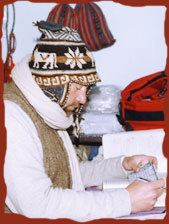 Since childhood, my imagination has been captivated by the peoples and landscape of Tibet and the Himalaya. I finally arrived in this region of the world at age twenty-five and commenced my research and explorations, to which I have now devoted more than two decades. In the first few years, I traveled extensively on foot in the Great Western Himalaya and Tibet, spending long periods of time away from modern frames of reference. During fieldtrips, I would ask many questions about local history and culture and take copious notes. I wintered in Dharamsala, applying myself to full time academic reading at the Library of Tibetan Works and Archives, trying to make better sense of all the things I had heard and seen. In my first decade in the high Himalaya, I acquired the requisite foreign language skills and proficiency in the methods of western scholarship to produce credible work. This enabled me to begin a noteworthy course of research, which I pursue to the present day.
The cultural history of pre-Buddhist Upper Tibet has emerged as my area of expertise. The pre-Buddhist period in Tibet is for all intents and purposes, synonymous with the Iron Age (certain elements of this anachronistic cultural and technological system persisted in Tibet through the first half of the First Millennium A.D.). Upper Tibet is the vast upland of northwestern Tibet, a region of interminable plains crisscrossed by lofty mountain ranges. I chose to specialize in an assessment of the paleoculture and archaeology of Upper Tibet because very little was known about these fields. Large swathes of the region had remained unexplored and Chinese archaeological inquiry in general was extremely minimal, furnishing considerable scope for making worthwhile scholarly contributions. From 1993 until 2000, I worked ten months a year on this research project and from 2000, I have devoted myself to it fulltime. In 2002, in lieu of my academic work, I was conferred a visiting scholar position at the University of Virginia. I also began my academic association with Oxford University in 2002.
To date, I have conducted formal interviews with many hundreds of residents in Upper Tibet. These have focused on various aspects of indigenous culture including but not limited to clan mythology and history, sacred geographic traditions, spirit-mediumship, and lore concerning the flora and fauna of the region. I am particularly interested in still practiced customs and beliefs that have correspondences to the Bon religion, as recorded in Tibetan literature. In order to contextualize my findings within a cultural historical framework, I have carried out an extremely rigorous survey of Tibetan texts, a bastion of my methodological and theoretical approach of placing ethnographic materials in a wider literary and historical framework. At the same time, I have comprehensively surveyed pre-Buddhist archaeological sites in virtually all areas of Upper Tibet. This aspect of my project entailed traveling more than 70,000 miles by motor vehicle, horseback and on foot. My surveying work has brought to light nearly 700 ancient sites, ushering in a new field of study in archaeology. Over the years, I have unremittingly charted the nature and extent of the Iron Age monuments and rock art in Upper Tibet, leading to the discovery of heretofore unknown types of mountain strongholds, semi-subterranean temples, burial grounds, and necropoli featuring large arrays of standing stones. The ethnohistorical implications of my findings for the development of Eurasian civilization in the Iron Age loom large, and promise to spur a new generation of intensive interdisciplinary scrutiny.
The fruits of my research are recorded in eight scholarly books, the first of which is entitled Divine Dyads: Ancient Civilization in Tibet (1997). This work looks at the mythic and religious make-up of two great mountain and lake pairs in Upper Tibet, furnishing a template upon which the interplay of indigenous and Buddhist traditions can be viewed. This work has been used in graduate level studies at academic institutions such as the University of Chicago and the University of Virginia. My second and third books (Antiquities of Northern Tibet and Antiquities of Upper Tibet) initiate the long process of registering the physical and geographic traits of the archaeological sites, analyzing their ceremonial and utilitarian functions, and determining cross-cultural affinities. My aim has been not only to bring new data to the fore but to present it in academic formats. In recognition of the intrinsic value of my discoveries and the level of scholarship I have achieved, my fourth book, Calling Down the Gods, was recently published as part of Brill’s prestigious Tibet Studies Library. This work explicates the history, ritual practices and pantheon of deities of the lha-pa (spirit-mediums) of Upper Tibet, an almost extinct class of religious functionaries involved in community well being and prognostication.
In addition to four books, I have written numerous technical and popular articles. My papers have appeared in a number of peer-reviewed journals including East and West (Rome), The Tibet Journal (Dharamsala), Rock Art Research (Melbourne), and Kailash (Kathmandu). My first archeological paper, A Preliminary Archaeological Survey of gNam mtsho and Dang ra g.yu mtsho (1996), was recently selected for inclusion in a three volume academic collection entitled The History of Tibet (Routledge Curzon). Another archaeological article of mine, Bringing to Light the Forgotten, has been translated into Chinese and published by the International Conference on Tibetan Archaeology and Art, Beijing, 2003.
Over the last twelve years, I have completed a comprehensive survey of pre-Buddhist archaeological sites in Upper Tibet, a project that entailed several years of grueling fieldwork. I have now turned by attention to writing up my findings, which will constitutea three volume treatise of more than 1200 pages. In addition to containing vital data on 400 archaeological sites, this set of tomes entitled Antiquities of High Tibet, will furnish extensive annotated translations of Tibetan texts that enshrine indigenous cultural materials. The Austrian Academy of Sciences has expressed strong interest in the publication of this work. I have already completed my translation and investigation of the archaic Tibetan funerary tradition from both Tun-huang and Bon literary sources. This comprises the first thorough study of the old eschatological traditions, certainly one of the most difficult areas in Tibetan philology.
My departure point was the fine work of Tibetologists such as Stein, Thomas and Lalou, who were among the first to carefully look at the funerary rituals preserved in the Tun-huang manuscripts (Tibet’s largest corpus of Imperial period literature). Thanks to the input of native scholars like Lopön Tenzin Namdak, I was able to make full translations of classical Bon funerary works, which served as an interpretive tool and grammatical index for the subsequent translation of Old Tibetan sources. In essence, I worked backwards in linguistic time, starting with textual resources that are written in a more familiar form of Tibetan before tackling those composed in the ancient language. The great French Tibetanist R. A. Stein suggested such an approach in his papers of the 1980’s, but this is the first time it has been realized on a significant scale. The many linguistic difficulties and the broad cultural background required to make sense of the death ritual texts, had previously dissuaded scholars from attempting such a study.
My inclusive study of the archaic funerary tradition throws up much textual material that is pertinent to the Imperial period (629-846 A.D.) culture and way of life in Tibet. Its significance therefore extends well beyond an elucidation of mortuary beliefs and practices to encompass prominent aspects of the religious and social structure of Tibetan dynastic times. As for my analytical method, I have taken the various funerary rituals and related them to my surface archaeological finds in Upper Tibet, a painstaking comparative exercise. I have also submitted the texts to an analysis based on a study of Inner Asian mortuary archaeology and the funerary traditions of contemporary peoples in contiguous regions. This cross-cultural perspective rooted in both the past and present, facilitates the placement of the Tibetan texts within the multiplex Inner Asian cultural world. In addition to funerary culture, Antiquities of High Tibet explores quasi-historical sources pertaining to the Upper Tibetan Iron Age kingdom of Zhang-zhung, relating them to the fabric of archaeological monuments and rock art I have discovered in the region. The work will inspect the costumes, tools and activities of the ancient Bonpo adepts and kings in order to assess the salient features of Zhang-zhung material culture. The data thus assembled should prove valuable as groundwork for the interpretation of archaeological finds once systematic excavation commences in Upper Tibet.